PEOPLE WE ARE PROUD OF
"Working with stone is marvellous"
WORDS AND PHOTOGRAPHY: BEATRIX TORMA
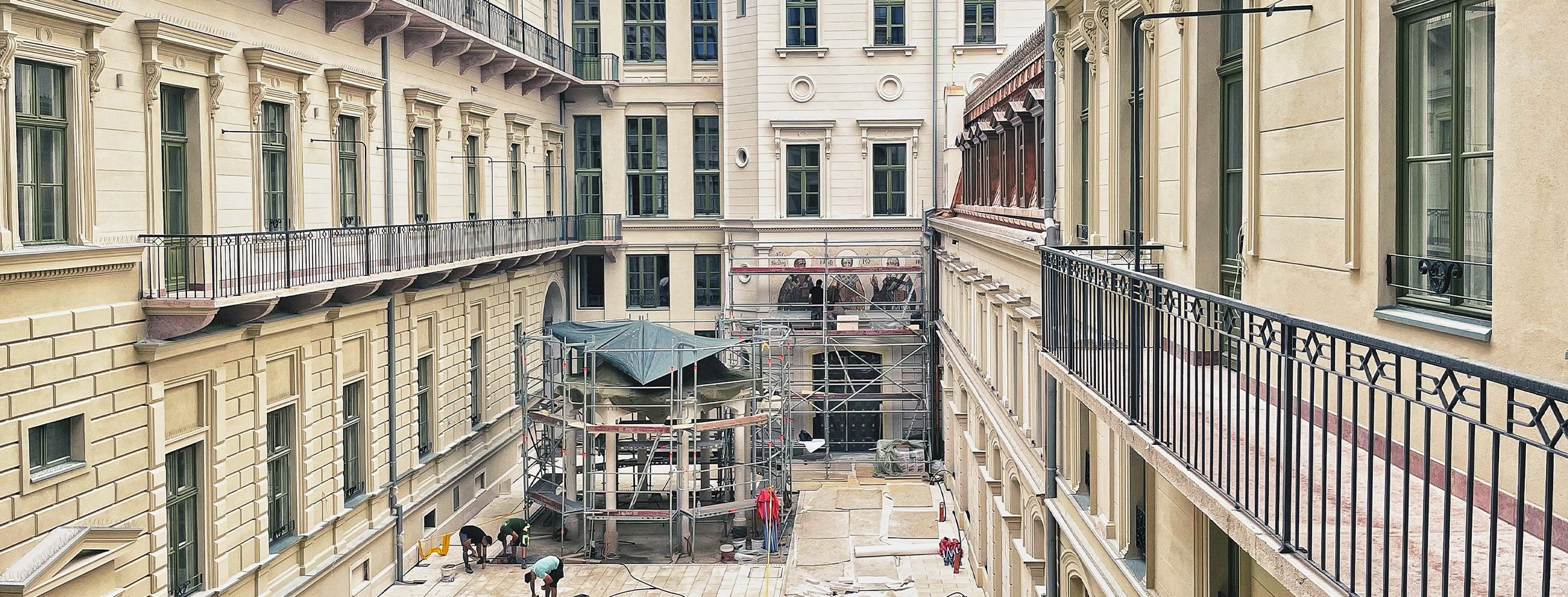
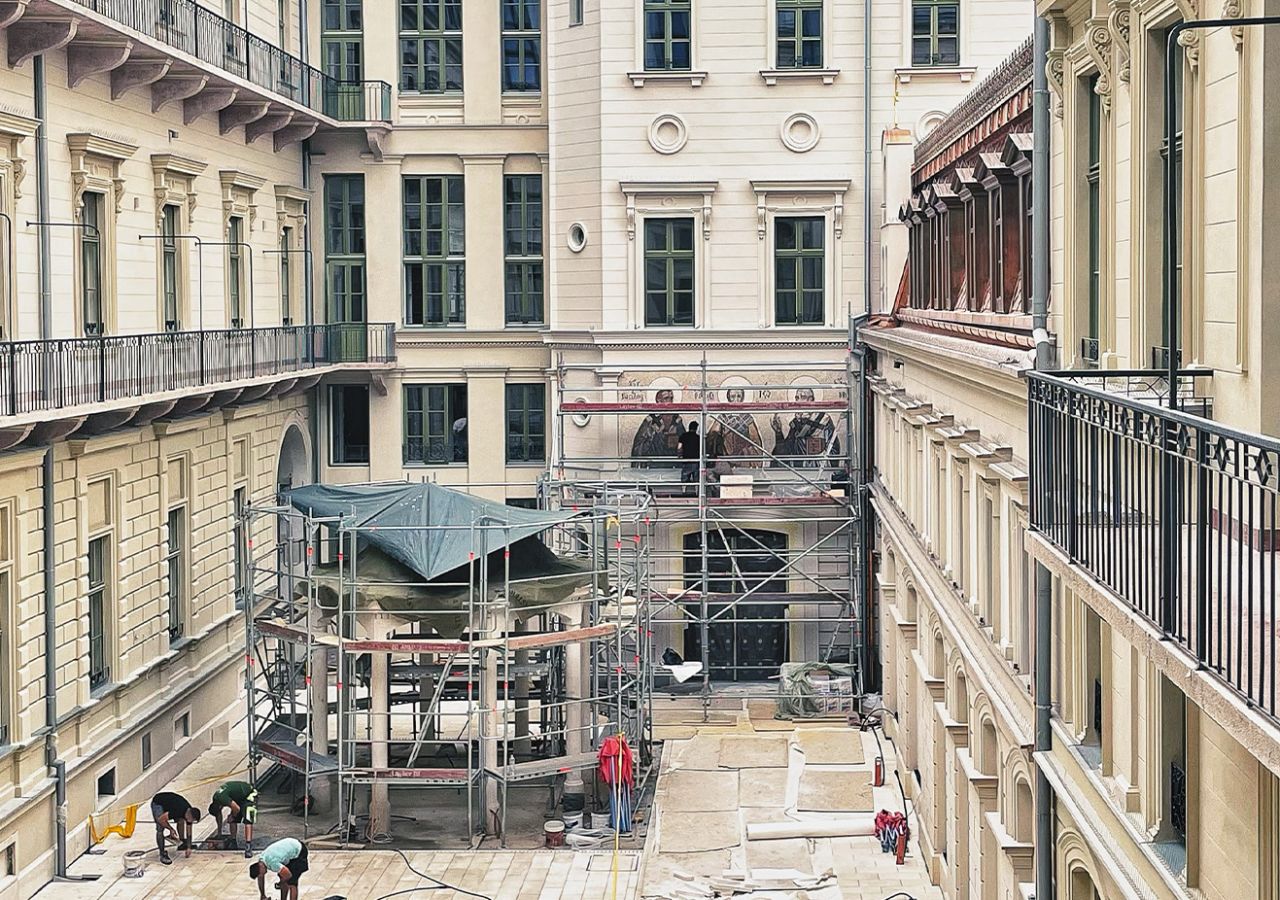
Tardos red limestone is one of the finest materials in Hungarian art history and architecture; due to its polishability and color, it was considered equivalent to genuine marble in the Middle Ages. This material, a favorite of King Matthias’s Renaissance court, can also be found in the Károlyi Palace in the Palace District, built at the Turn of the Century, where the restoration work was carried out by Vivien, a colleague skilled in both architectural sculpture and stone restoration.
RESTORATION OF A SUSPENDED CORRIDOR
TARDOS RED LIMESTONE
One of the earliest examples of this material is the ornate portal of the Royal Chapel in Esztergom (formerly St. Adalbert’s Cathedral), made of red and white marble, the Porta Speciosa, built during the reign of King Béla III in the last decade of the 12th century, which today survives only in depictions and small fragments at the Esztergom Castle Museum. The use of red limestone has lost none of its popularity over the centuries. Due to its frost resistance, low water absorption, and high compressive strength, it is ideally suited for both indoor and outdoor use.
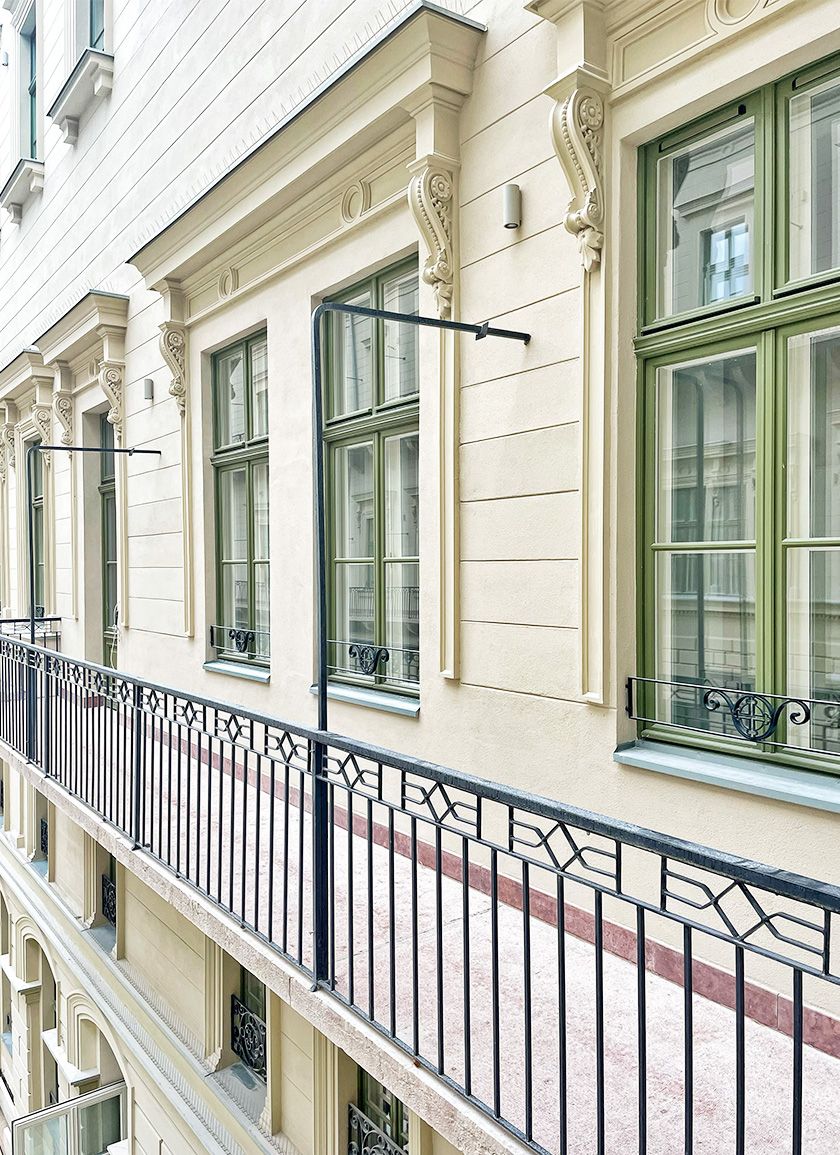
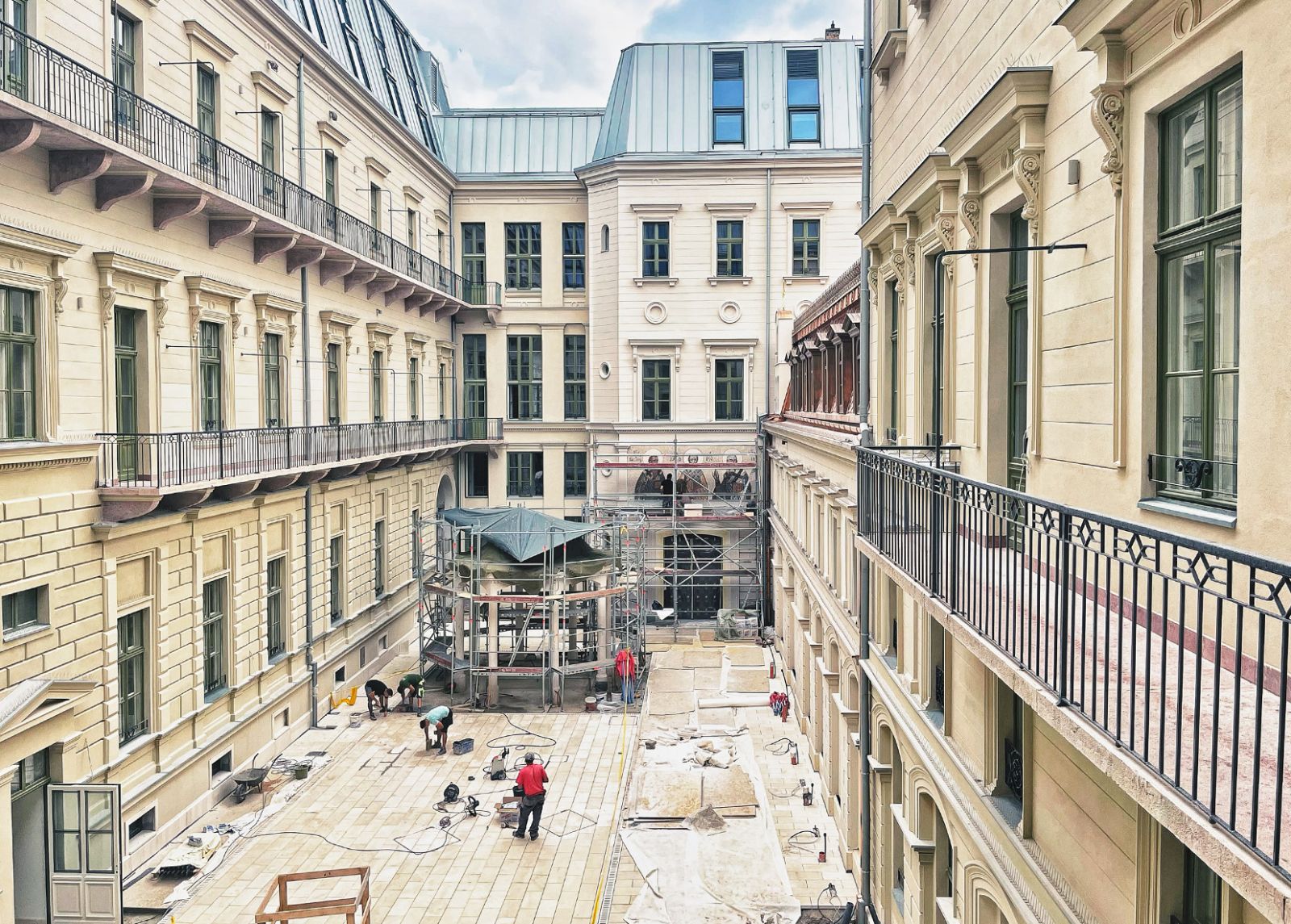
In the Károlyi Palace, designed by Antal Szkalnitzky between 1869 and 1871 (and already handed over for use in 1871!) and located next to the National Museum, the architect used it as the flooring for the suspended corridors.
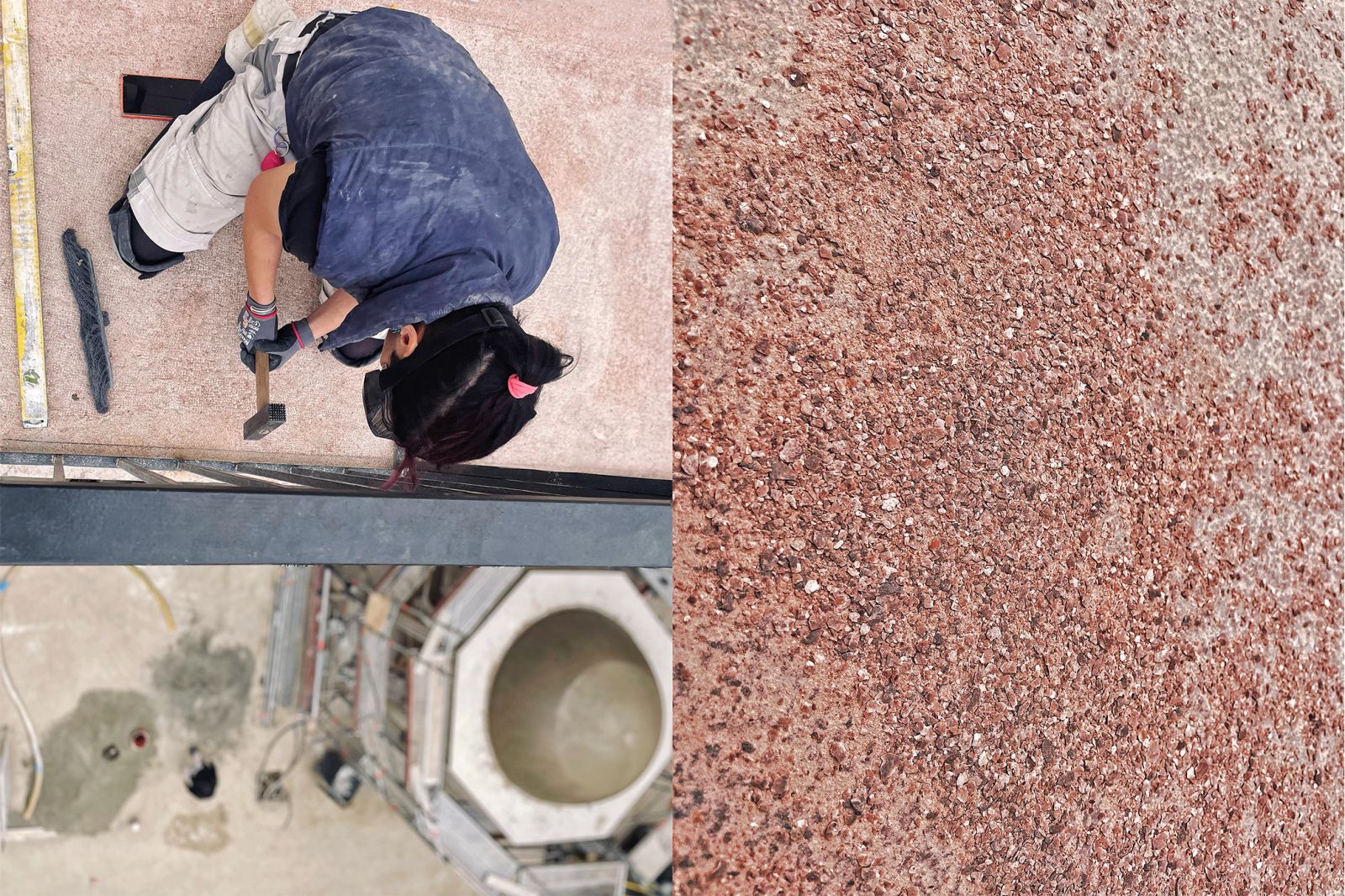
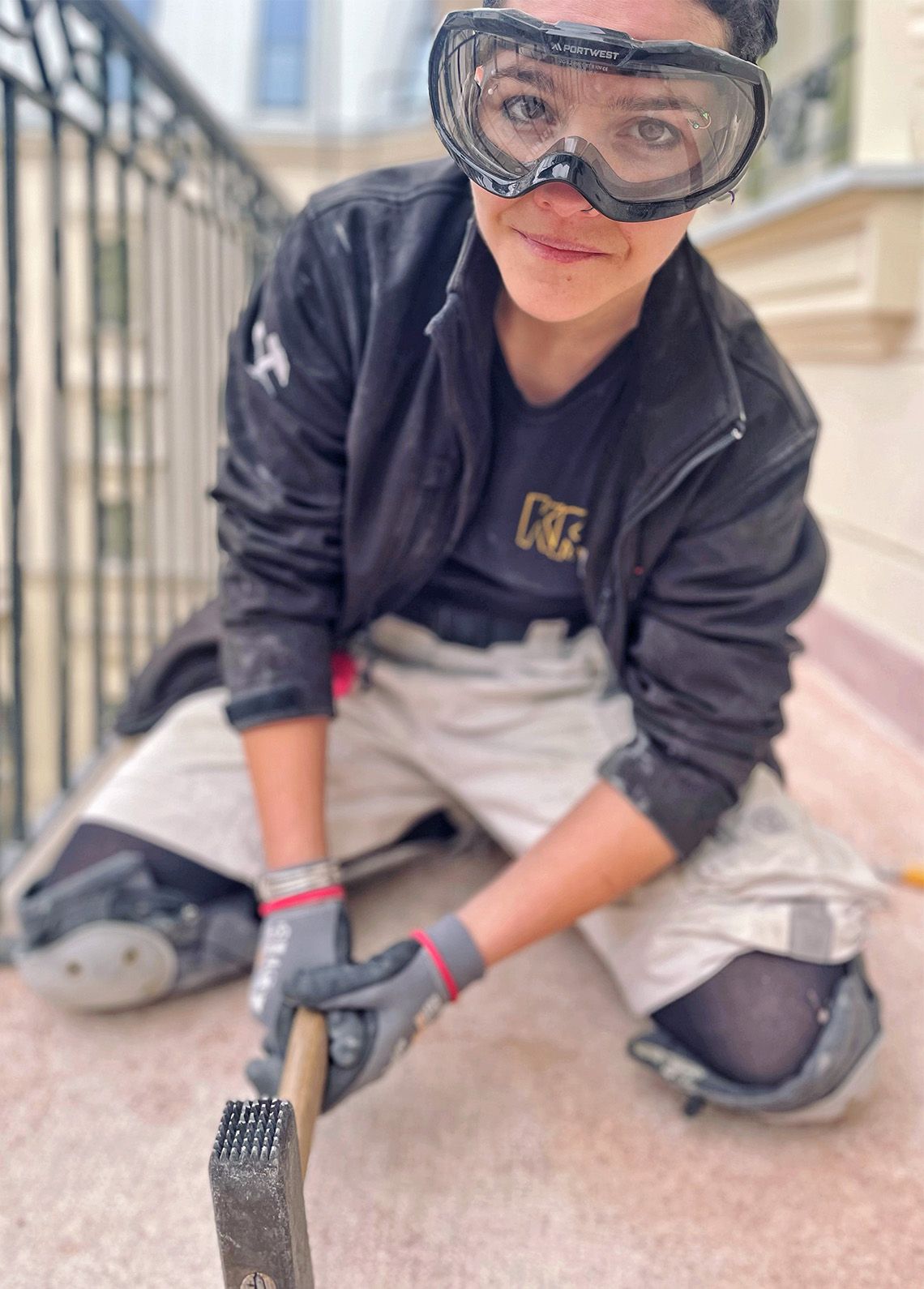
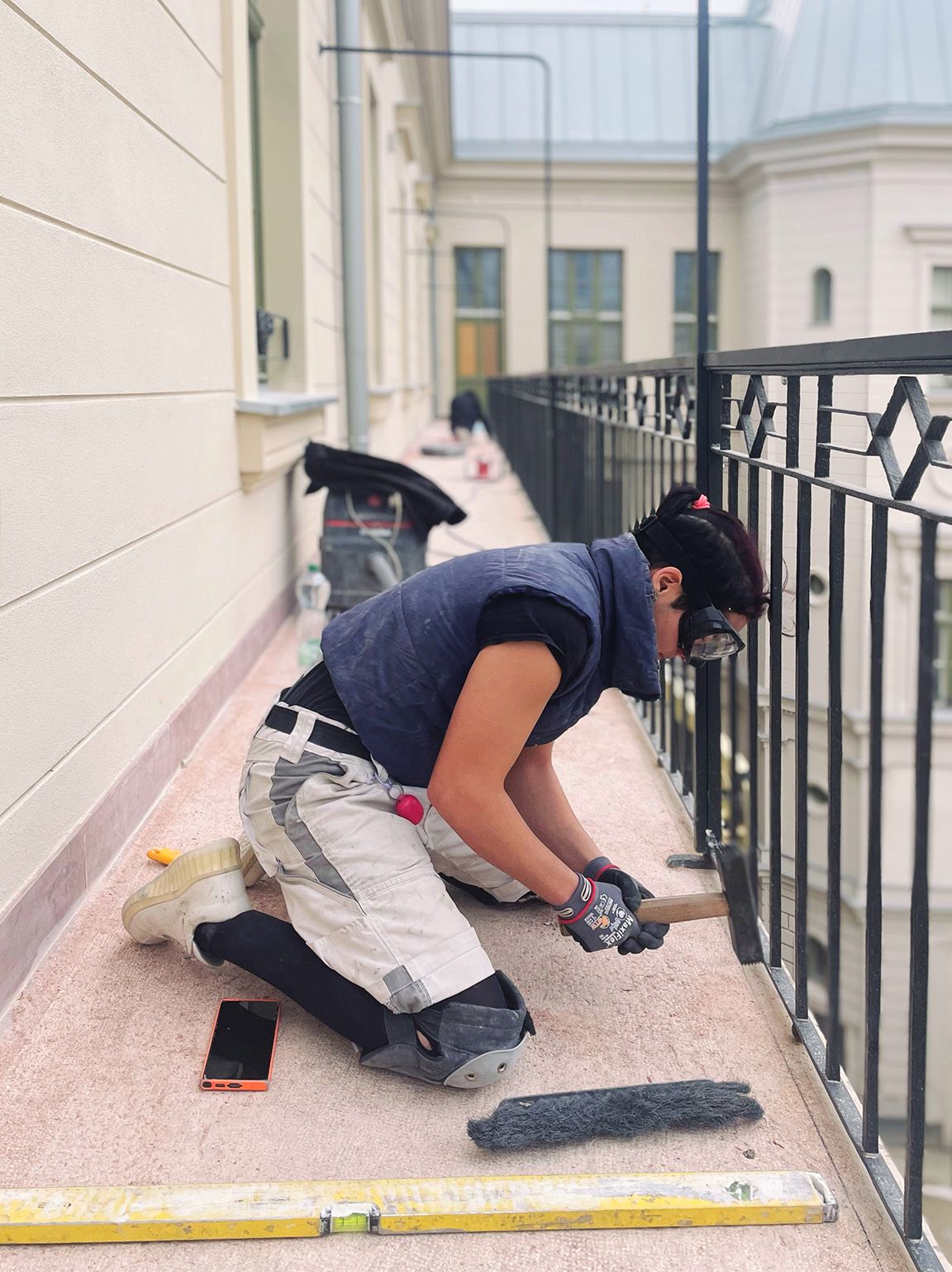
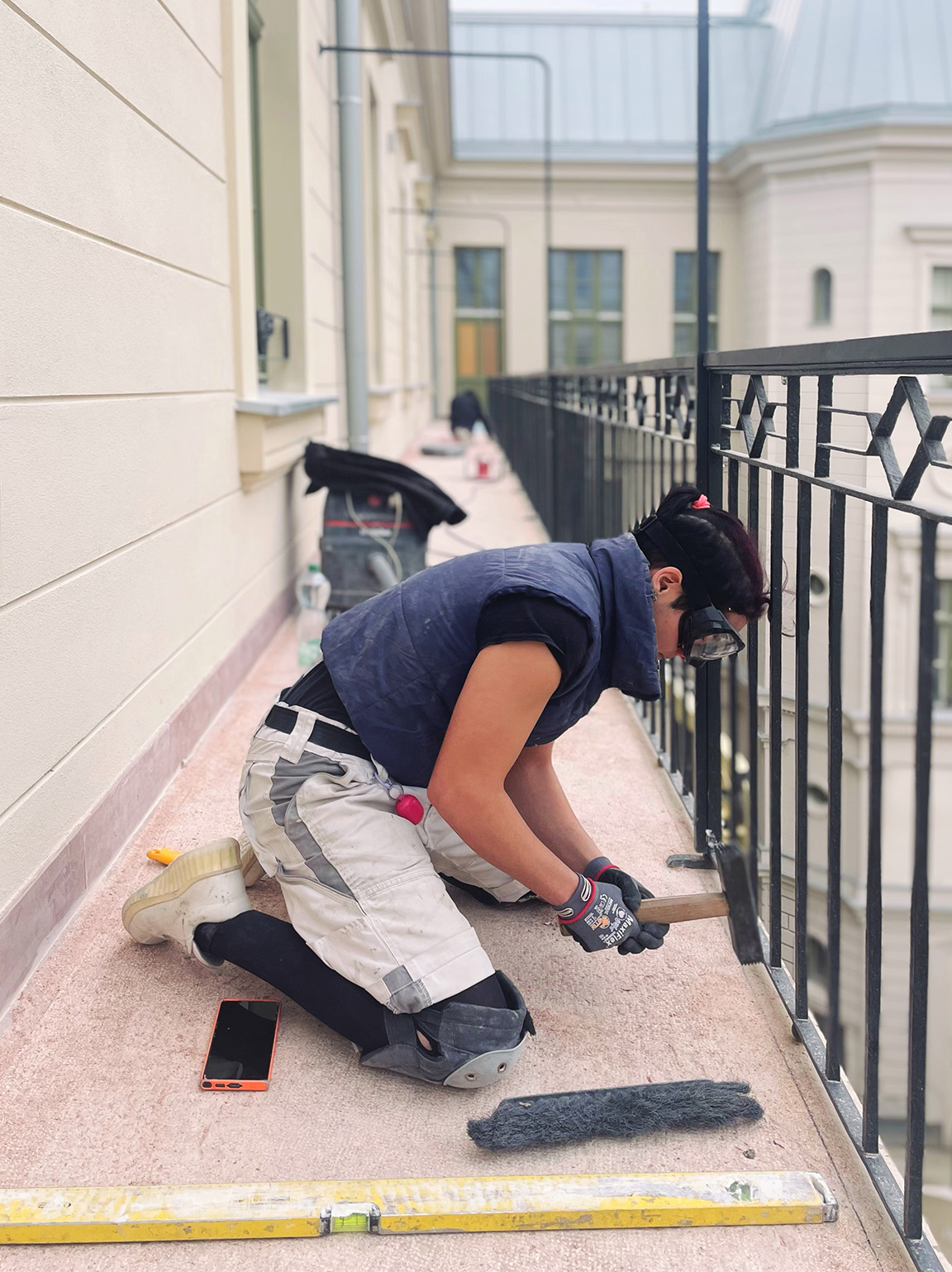
The renovation of the suspended walkway flooring was carried out by Iamart. To the great astonishment and admiration of the almost exclusively male workforce on the construction site, the lion’s share of this exceptionally physically demanding work was performed and personally supervised by our female colleague.
"It's our responsibility, whether we like it or not"
Vivi, a trained ceramicist, has been working in the construction industry for a decade, gaining knowledge and experience in the fields of architectural sculpture and stone restoration as well.
"Architectural sculpture encompasses everything—you have to know how to plaster, work with plaster materials, design, and understand what modularization is."
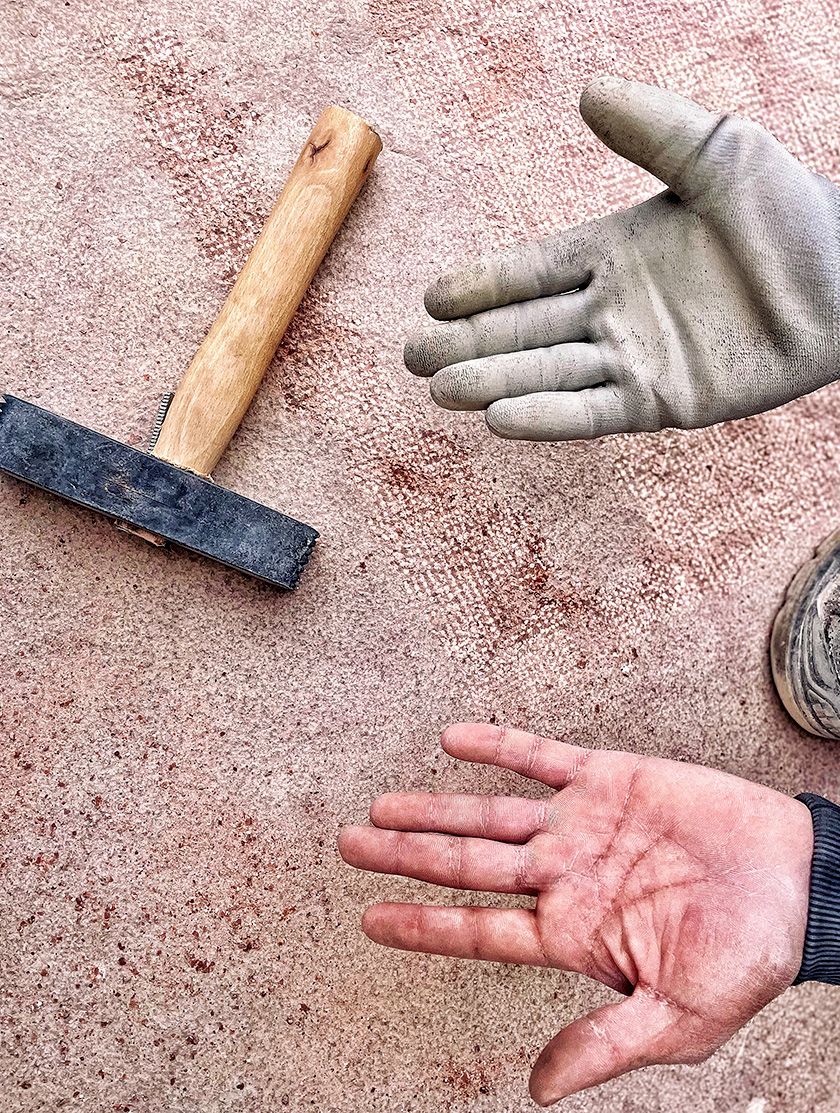
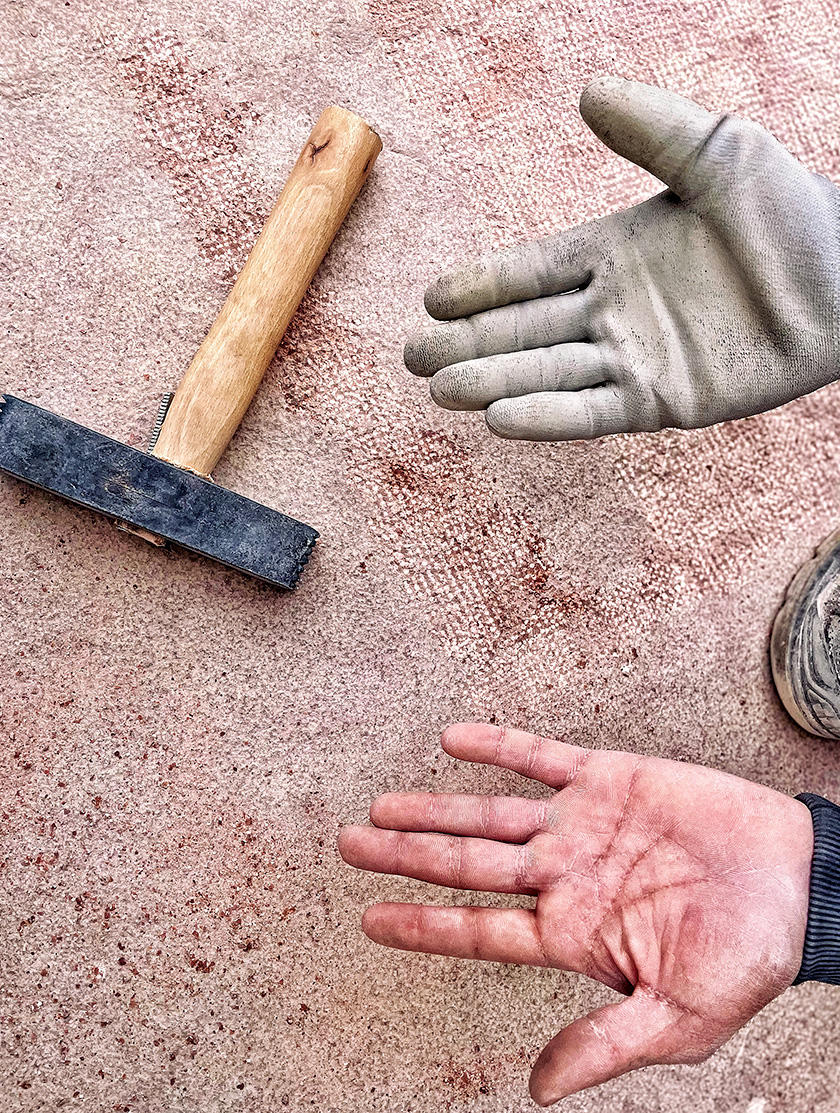
The previosusly surface of the suspended walkways taken over by Iamart did not meet the client’s expectations. The carpet-like textured surface we created was crafted by hand by Vivi, which won the client’s approval.
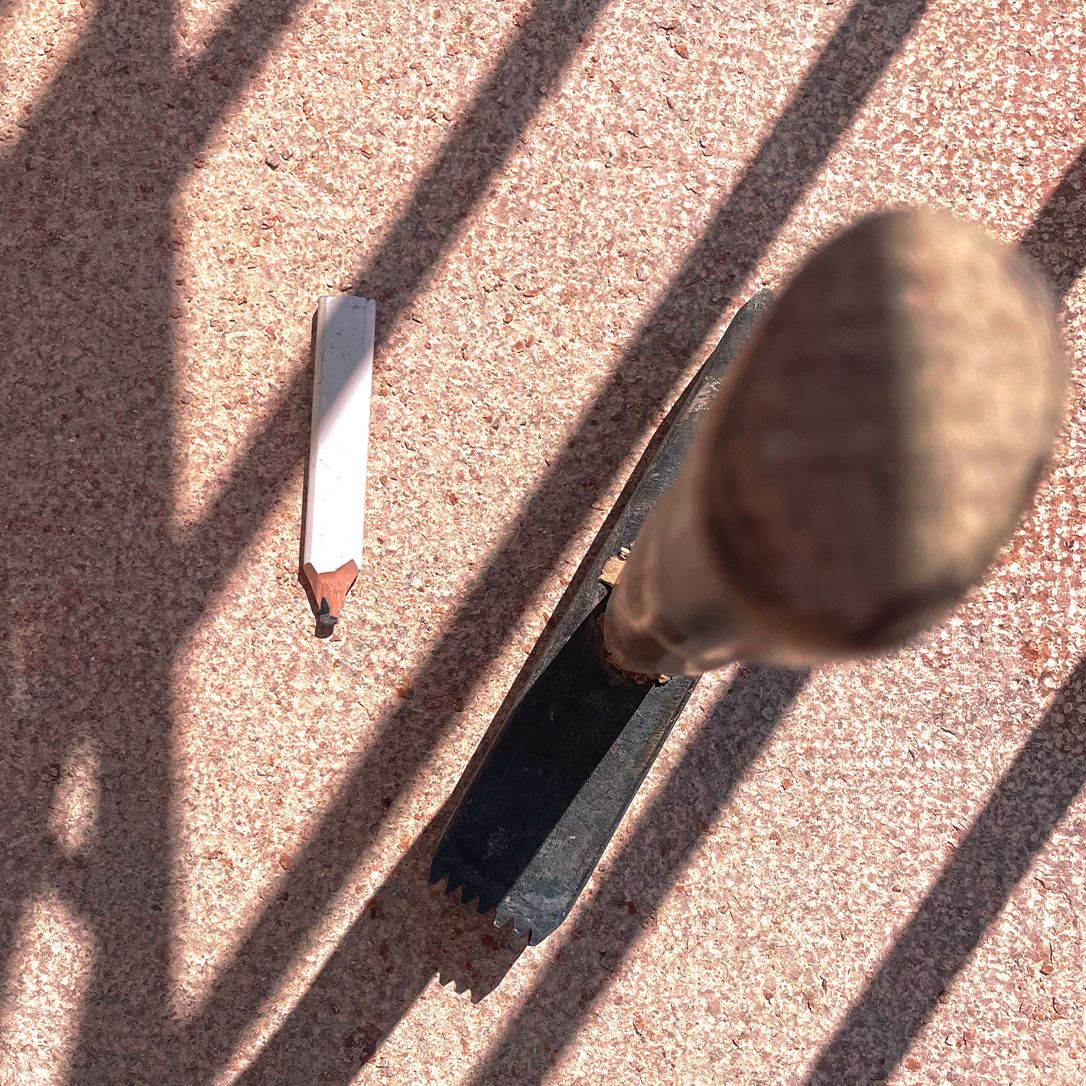
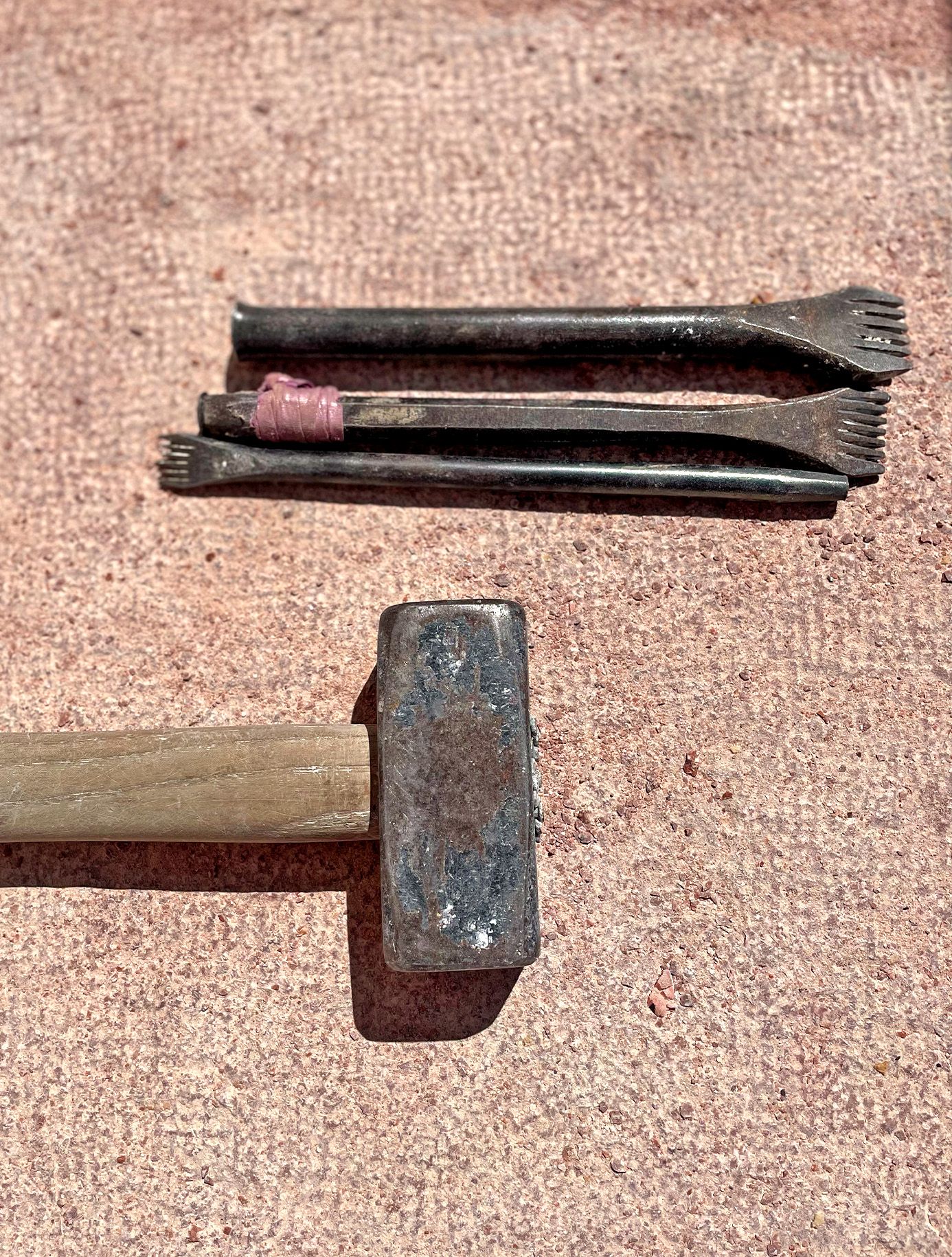
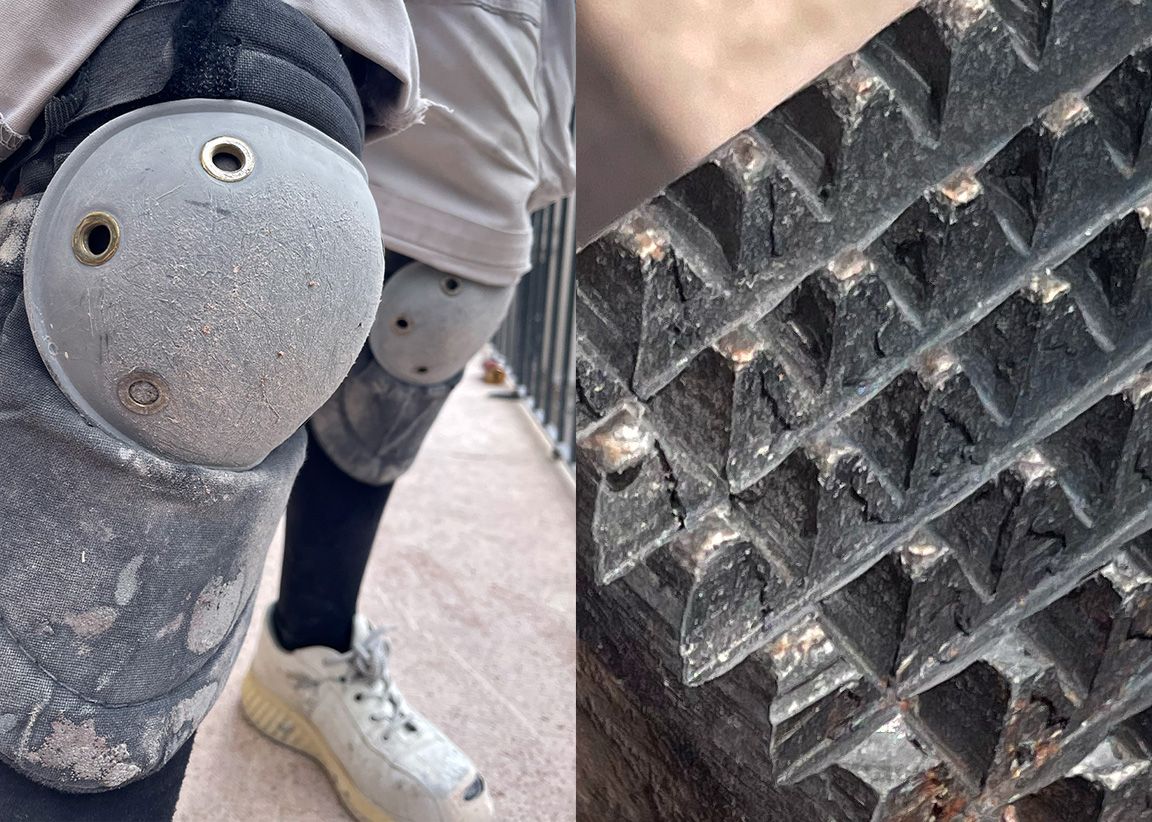
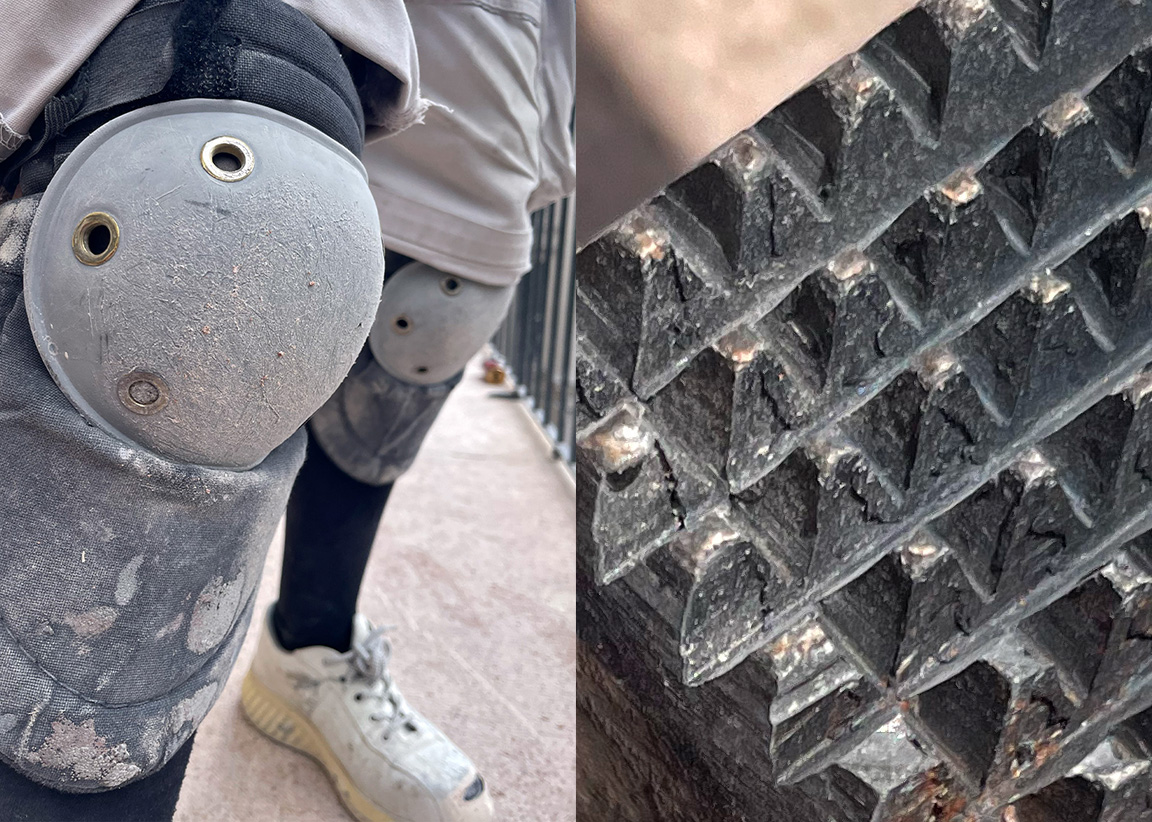
"The point isn’t to smash the material, but to create a surface. And for that, you need to use the tool properly. The essence of the "stokkolás" (chiseling) is that all the teeth must touch the stone’s surface at once, and as the teeth strike, the force causes the stone to shatter beneath them. It’s as if small explosions are occurring, and the stone must flake off. We keep striking until all the teeth leave marks in the stone. For beautiful "stokkolás" (chiseling), we work in either rows or columns."
Vivien approaches her work with humility, tireless dedication, and enthusiasm; it is very important to her to do excellent work.
"We are honored to preserve the creations of architects and artists for future generations. The responsibility is ours, whether we like it or not. If someone isn’t aware of this, they shouldn’t even touch the work."
And what other skills would you like to learn here at Iamart?
"I really like the big machines we use. The first time I tried it, the machine rolled back about three meters, but I managed to get it moving. I’m also interested in polishing and sanding, and I’d love to learn more about them."
RESTORATION OF A SUSPENDED CORRIDOR
TARDOS RED LIMESTONE
One of the earliest examples of this material is the ornate portal of the Royal Chapel in Esztergom (formerly St. Adalbert’s Cathedral), made of red and white marble, the Porta Speciosa, built during the reign of King Béla III in the last decade of the 12th century, which today survives only in depictions and small fragments at the Esztergom Castle Museum. The use of red limestone has lost none of its popularity over the centuries. Due to its frost resistance, low water absorption, and high compressive strength, it is ideally suited for both indoor and outdoor use.
In the Károlyi Palace, designed by Antal Szkalnitzky between 1869 and 1871 (and already handed over for use in 1871!) and located next to the National Museum, the architect used it as the flooring for the suspended corridors.
The renovation of the suspended walkway flooring was carried out by Iamart. To the great astonishment and admiration of the almost exclusively male workforce on the construction site, the lion’s share of this exceptionally physically demanding work was performed and personally supervised by our female colleague.
"It's our responsibility, whether we like it or not"
Vivi, a trained ceramicist, has been working in the construction industry for a decade, gaining knowledge and experience in the fields of architectural sculpture and stone restoration as well.
"Architectural sculpture encompasses everything—you have to know how to plaster, work with plaster materials, design, and understand what modularization is."
The previosusly surface of the suspended walkways taken over by Iamart did not meet the client’s expectations. The carpet-like textured surface we created was crafted by hand by Vivi, which won the client’s approval.
"The point isn’t to smash the material, but to create a surface. And for that, you need to use the tool properly. The essence of the "stokkolás" (chiseling) is that all the teeth must touch the stone’s surface at once, and as the teeth strike, the force causes the stone to shatter beneath them. It’s as if small explosions are occurring, and the stone must flake off. We keep striking until all the teeth leave marks in the stone. For beautiful "stokkolás" (chiseling), we work in either rows or columns."
Vivien approaches her work with humility, tireless dedication, and enthusiasm; it is very important to her to do excellent work.
"We are honored to preserve the creations of architects and artists for future generations. The responsibility is ours, whether we like it or not. If someone isn’t aware of this, they shouldn’t even touch the work."
And what other skills would you like to learn here at Iamart?
"I really like the big machines we use. The first time I tried it, the machine rolled back about three meters, but I managed to get it moving. I’m also interested in polishing and sanding, and I’d love to learn more about them."
