

MONOLIT TERRAZZO PLUS
Neoclassical and Dolce Vita
WORDS AND PHOTOGRAPHY: BEATRIX TORMA
We are always delighted when a historic building is rescued from a dilapidated and seemingly hopeless state and is given the opportunity to be reborn and once again become part of the cycle of our present and future lives. It is especially gratifying for us when Iamart can contribute to the preservation of this heritage through our work. During the renovation of the Medetz House, we responded to contemporary architectural demands.
MEDETZ - HOUSE, KIRÁLY 36.
CAST MONOLITHIC TERRAZZO PLUS
Numerous prominent architects contributed to the development of Pest’s cityscape during the Reform Era, including József Hild, a leading figure in Hungarian Classicist architecture. Hild is credited with the apartment building at 36 Király Street in Terézváros, documented as the “Medetz House” after its builder, József Medetz, a former tobacco merchant, for which he received the commission in 1846.
Almost every house in the district bears historical significance; its residents were once prominent figures in political, economic, cultural, religious, or even sporting life. A famous native of the "Medetz House" was Attila Petschauer (1904–1943), an Olympic champion fencer whose talent was recognized by the era’s most famous fencing master, the Italian Italo Santelli.
Many decades passed before the condition of this building—of pivotal importance in terms of urban, architectural, and cultural history—became increasingly dire. The former Classicist palace, crumbling into itself, awaited the fulfillment of its fate when, finally, an investor arrived who took the entire beautiful building under his care, transforming the upper floors into a boutique hotel with an exciting atmosphere, a garden restaurant surrounded by greenery, and a cocktail bar.
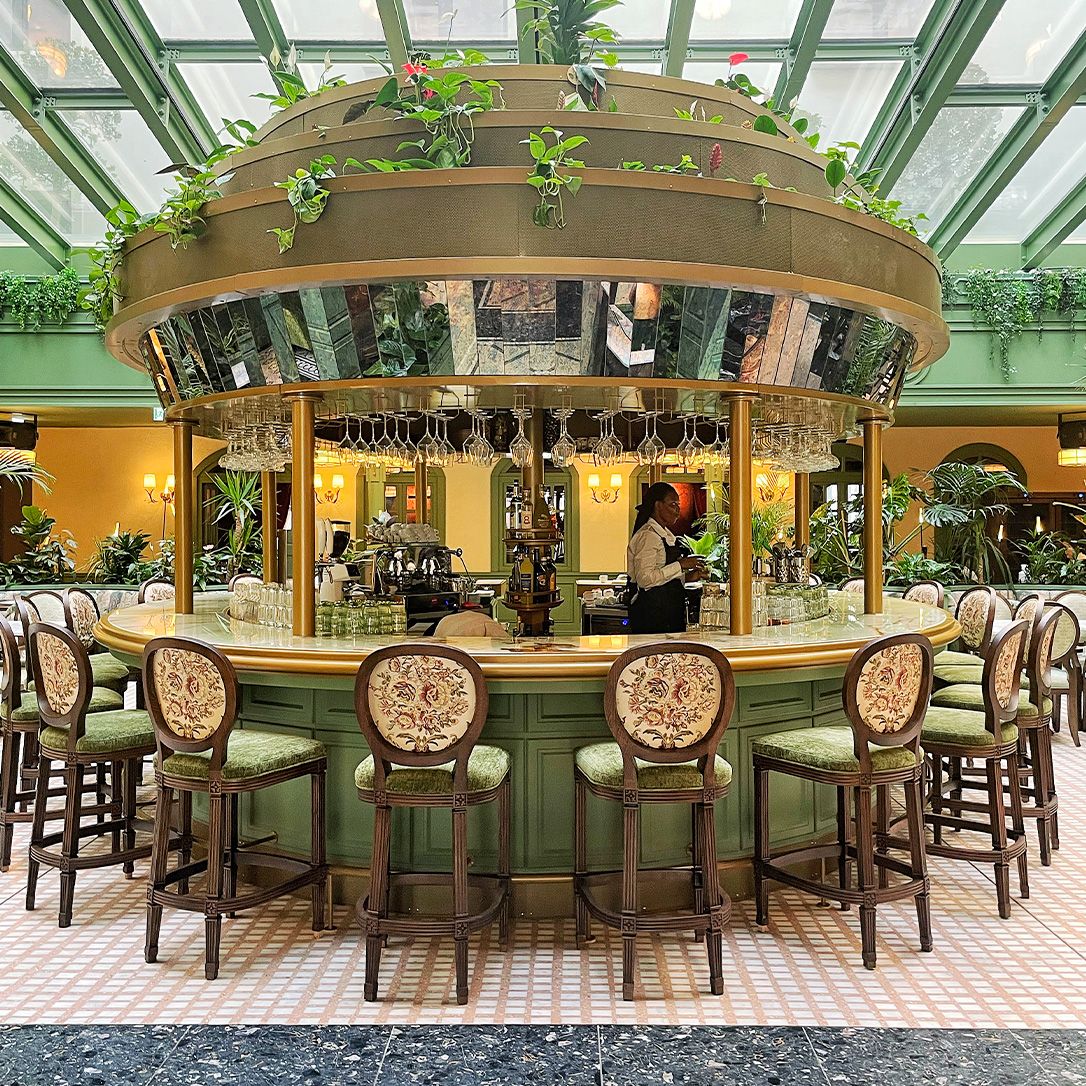
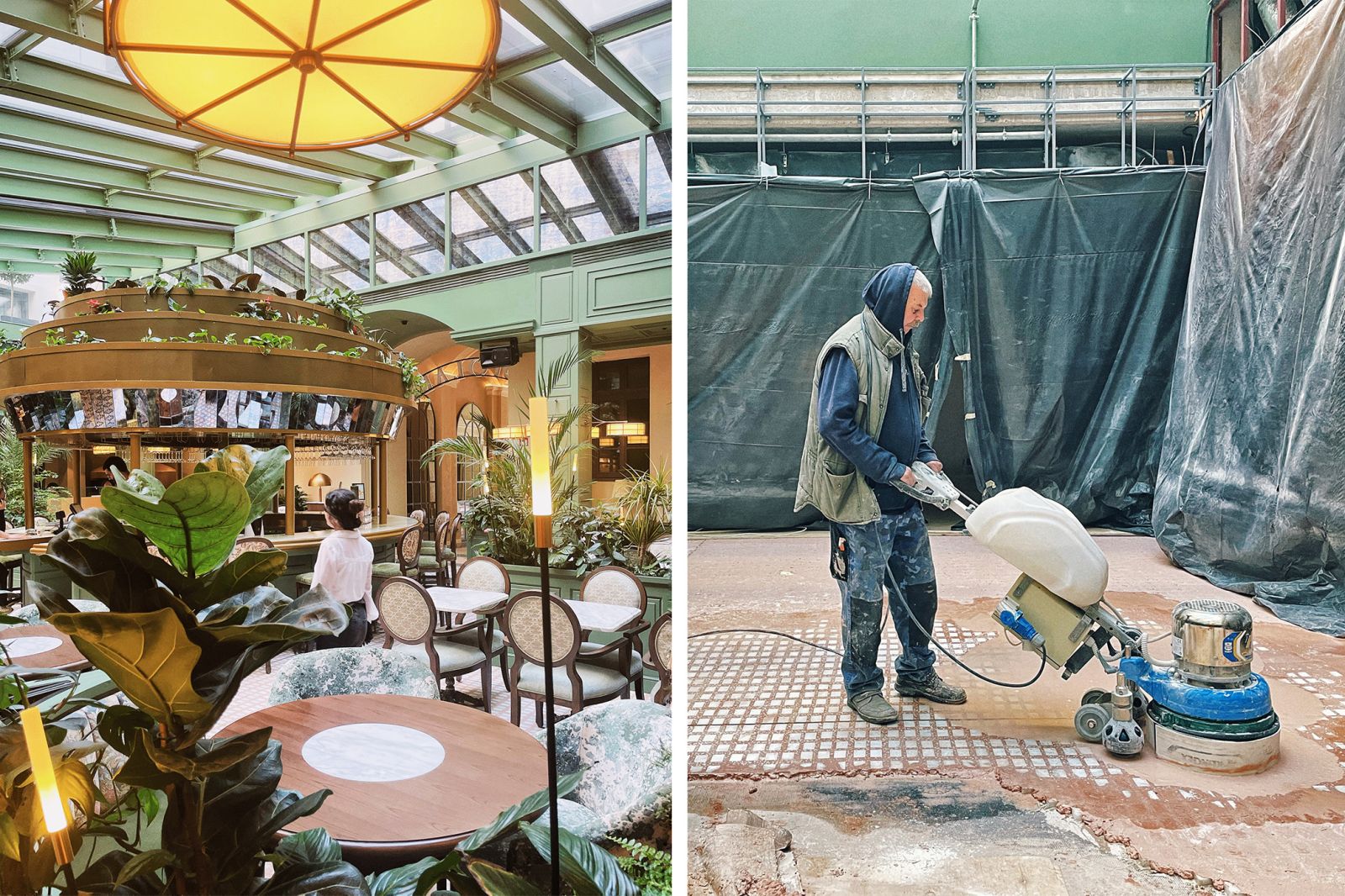
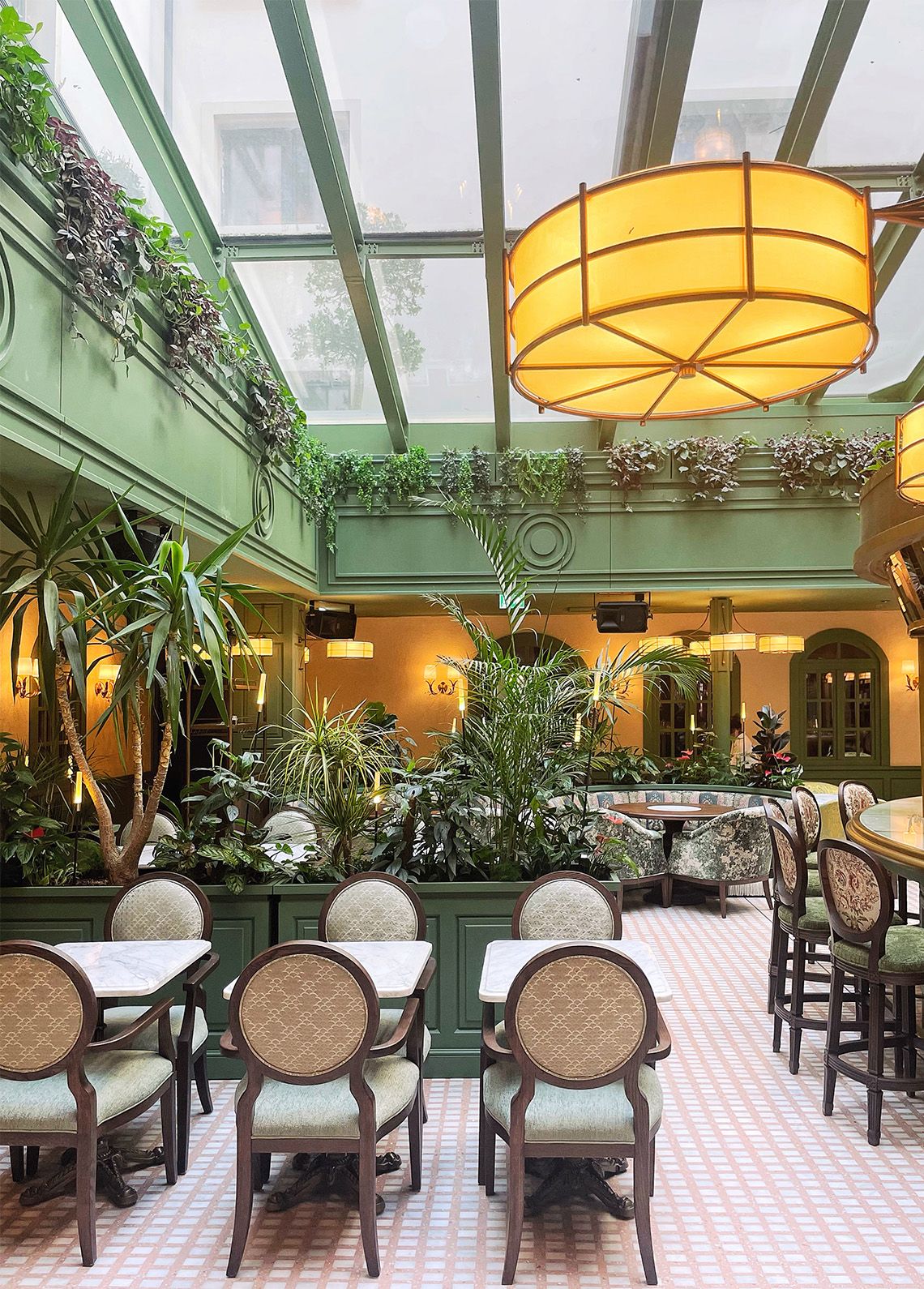
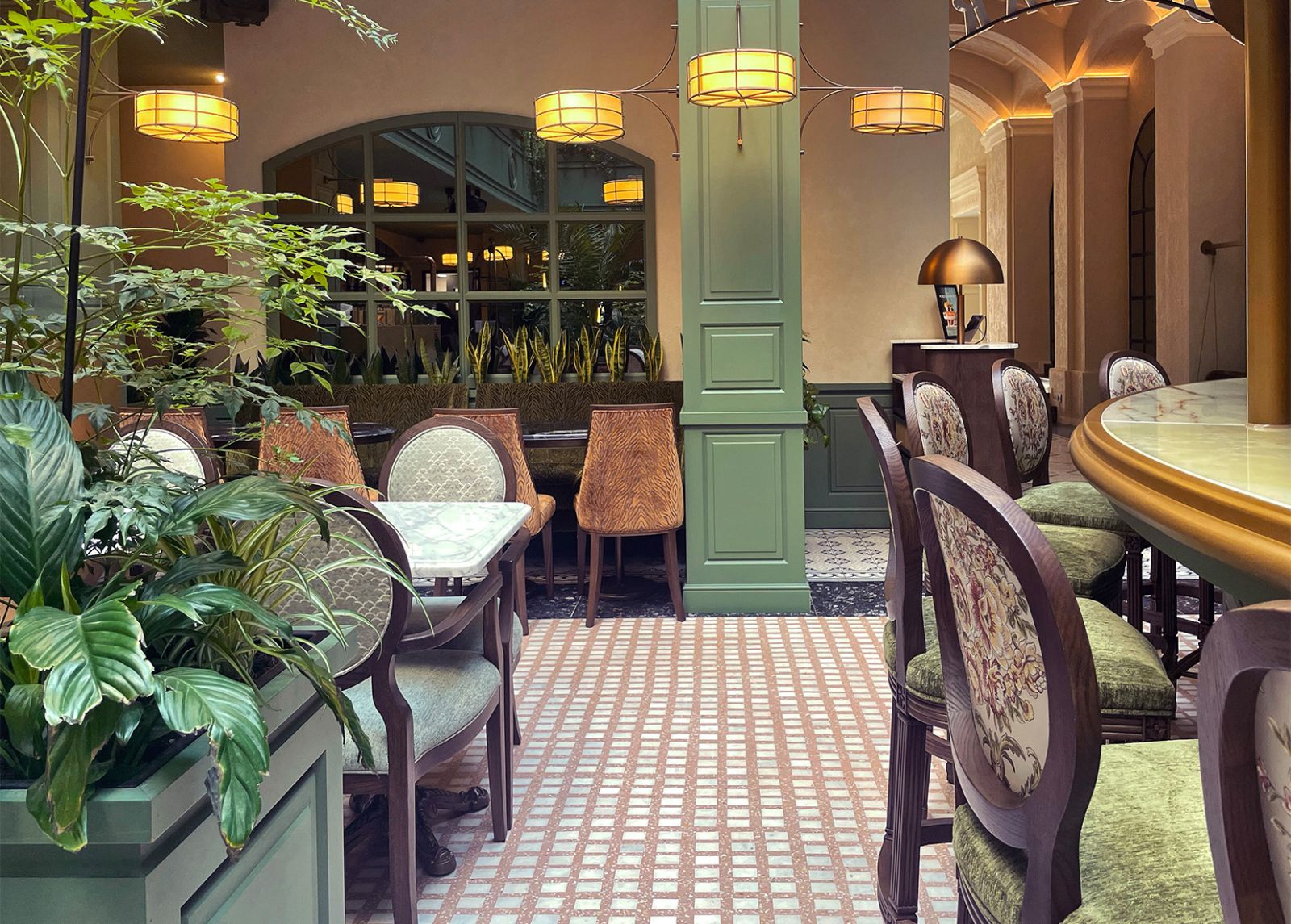
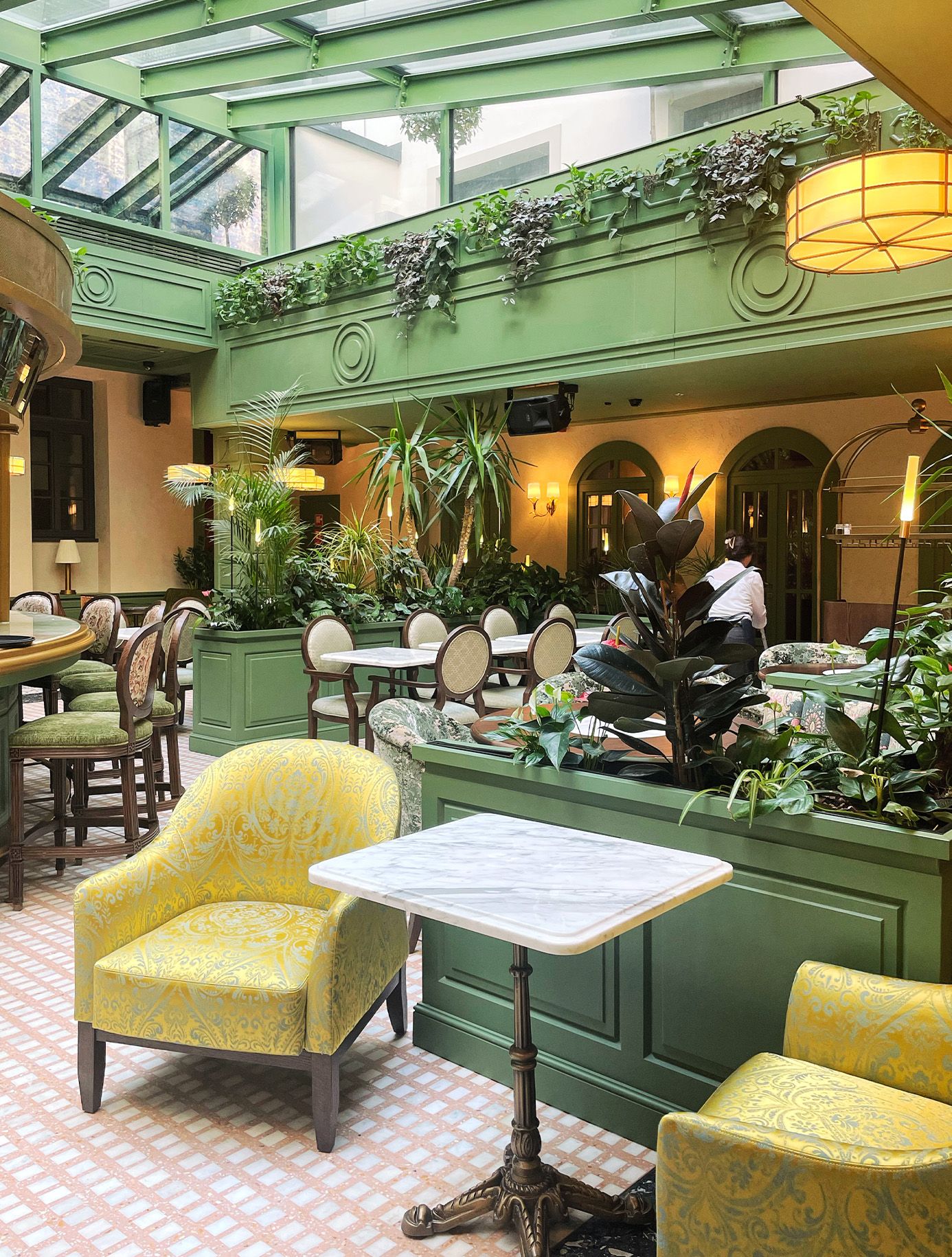
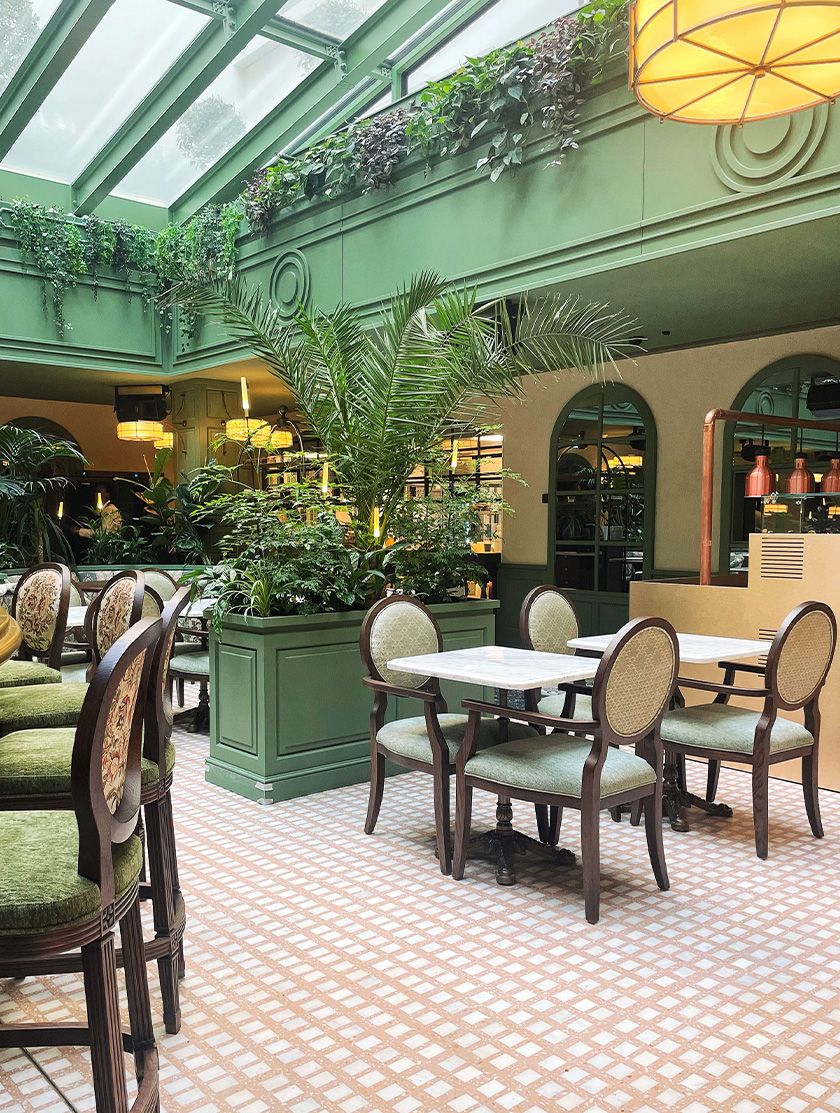
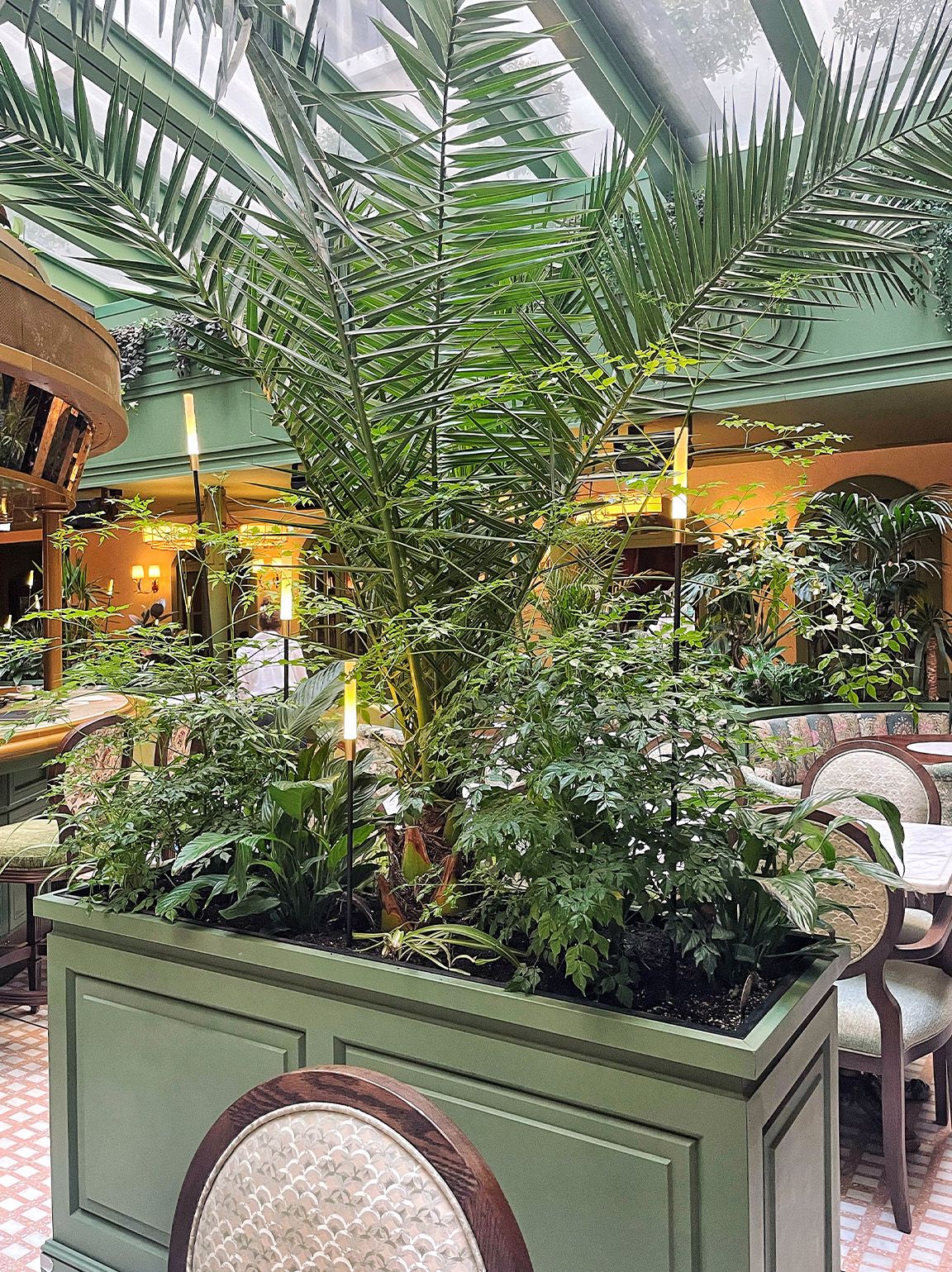
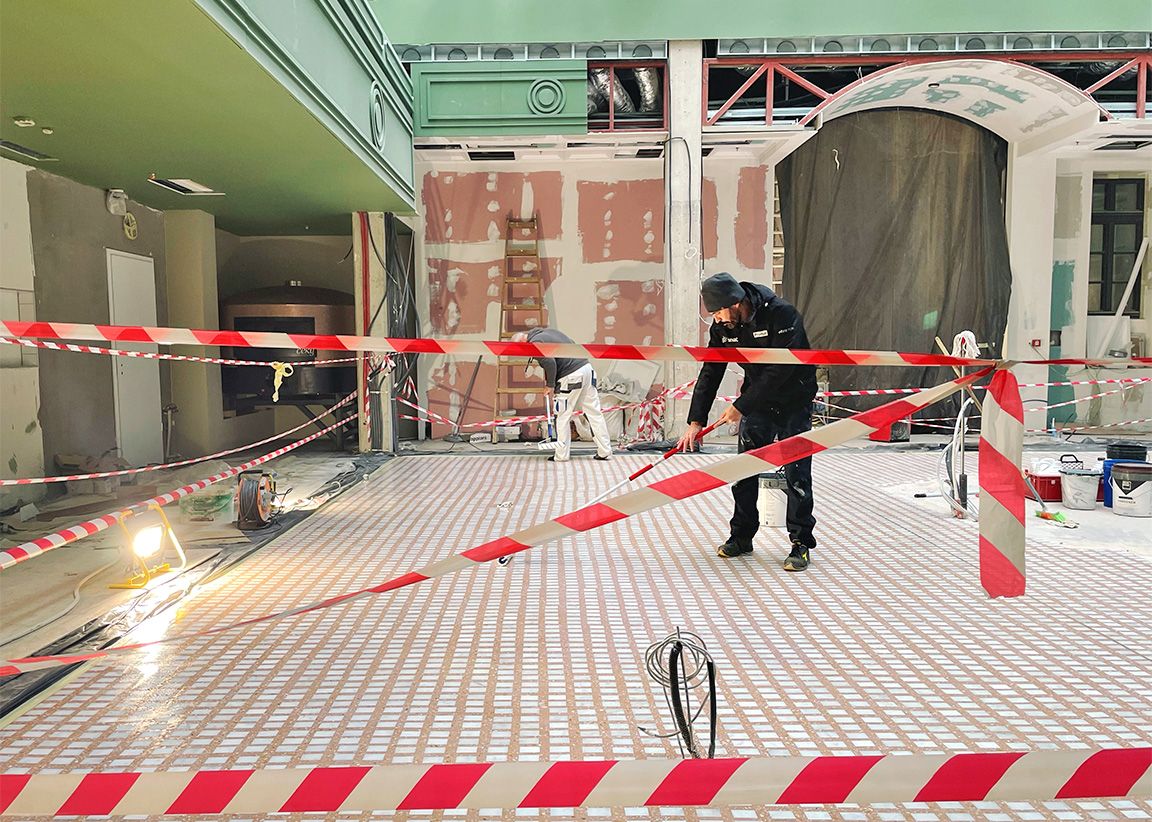
Iamart created the central flooring of the atrium, an eclectic space dotted with plants, green and yellow patterned upholstery, atmospheric lighting, and cozy nooks that offer intimacy even amidst the bustling atmosphere. The designers approached the manufacturer with a clear vision,
resulting in a custom-designed, on-site poured Monolit Terrazzo Plus surface featuring Carrara marble inlays.
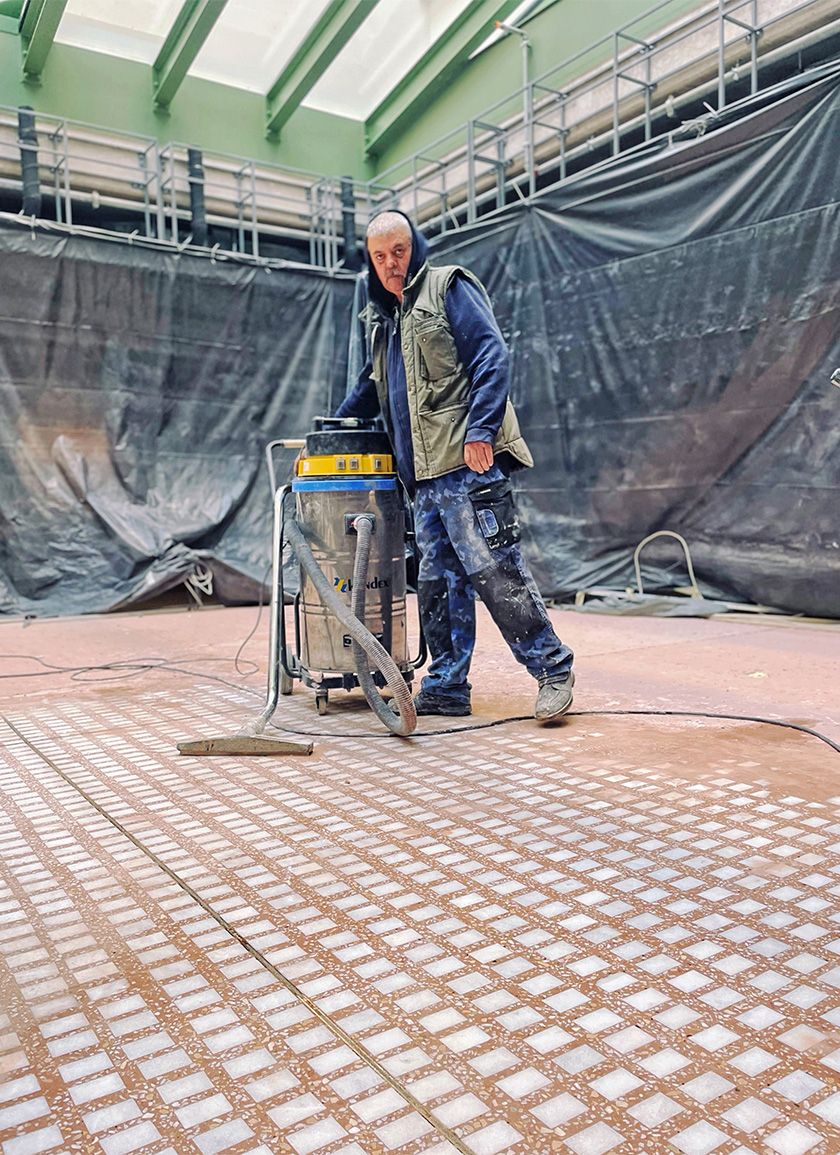
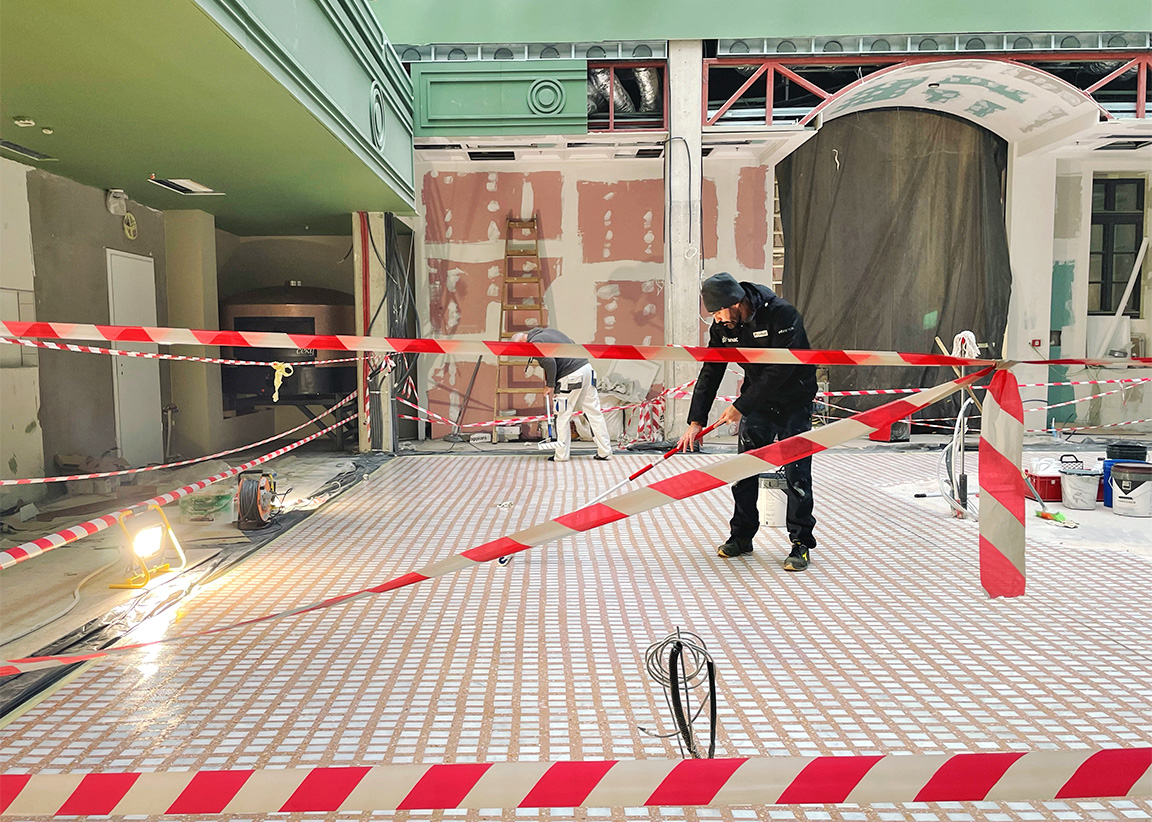
One of the first phases of creating the poured flooring was the placement of the white marble inlays, which was also the greatest challenge of the project. Not only because the laid-out inlays had to be precisely encased with the paste-like material containing marble chips, but also because leveling the surfaces with varying thicknesses and textures required careful attention.
The surface grinding and finishing were also carried out by Iamart’s specialists.
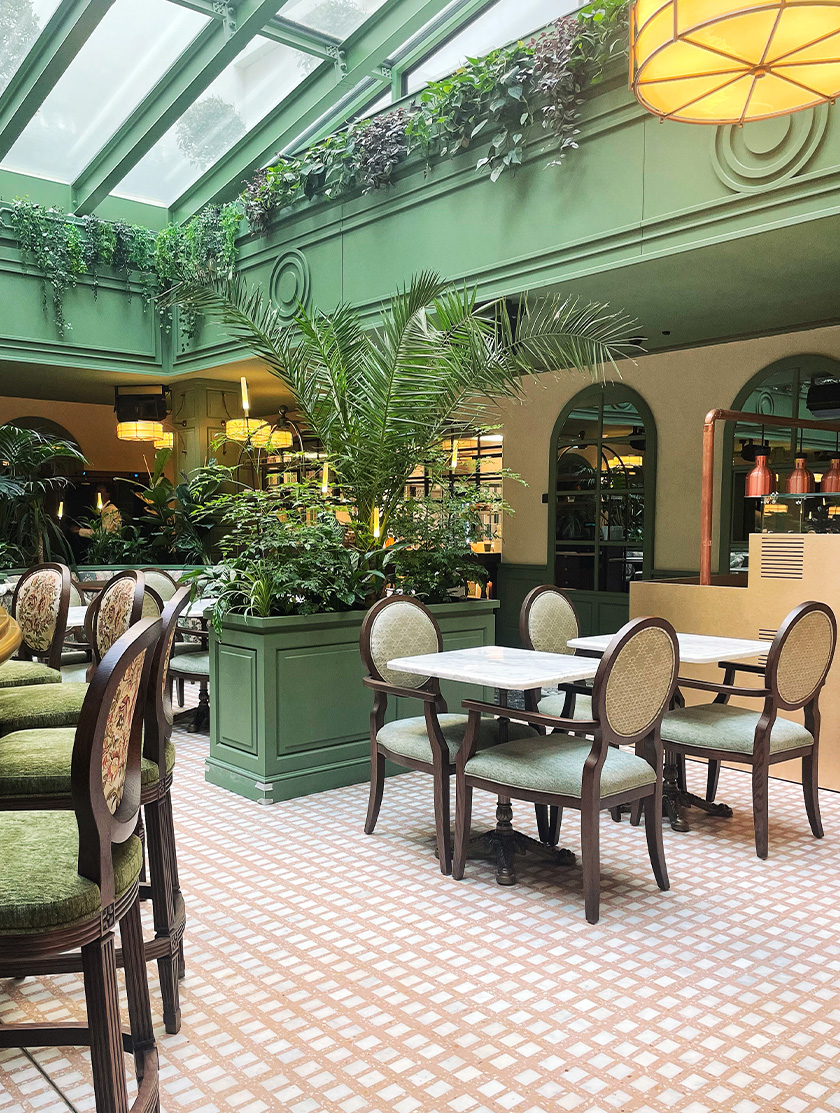
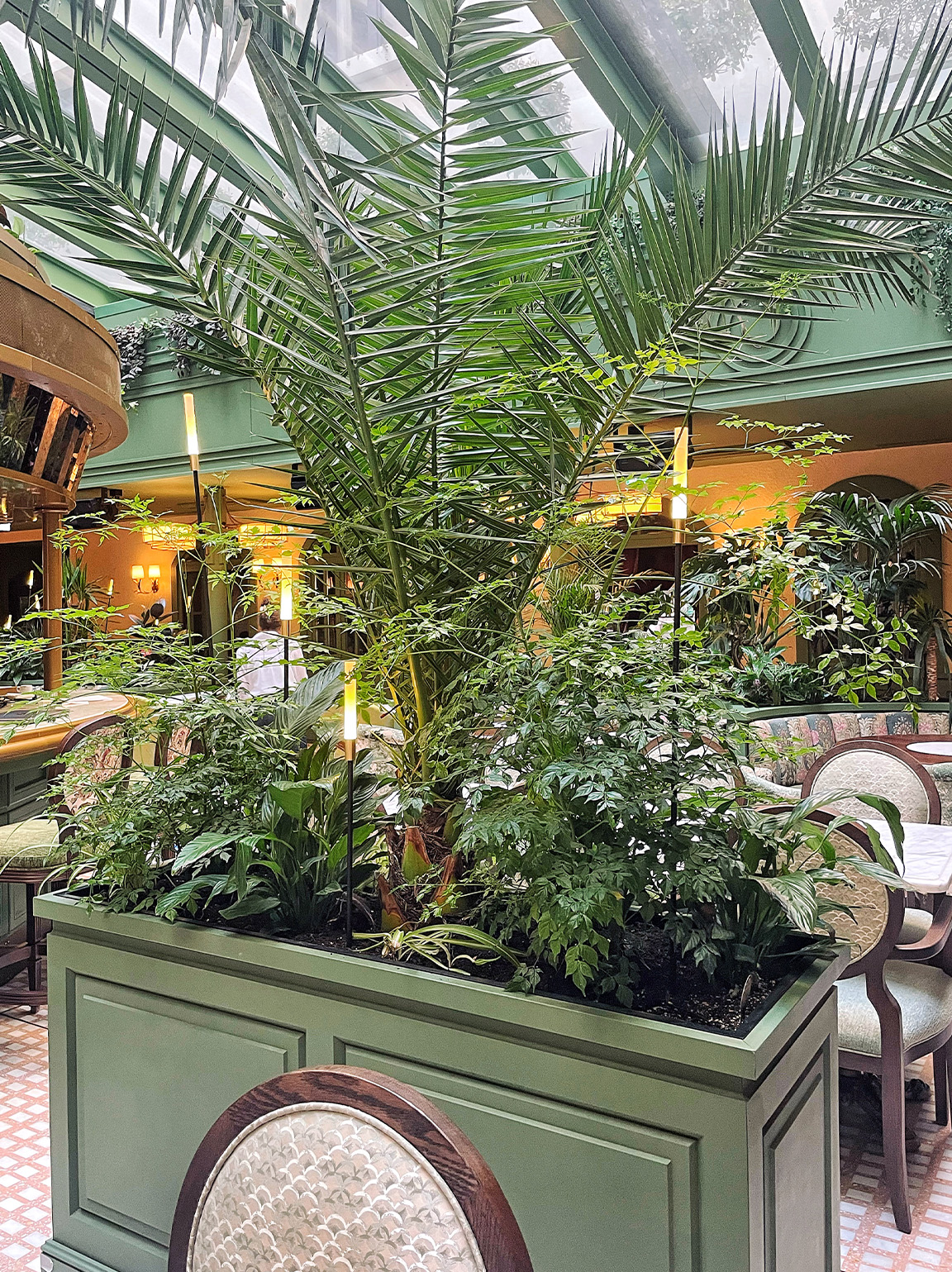
The message of this Italian restaurant, named Popolare (meaning “popular”), is that everyone is welcome to gather around the table to enjoy life’s little pleasures—a good cup of coffee with friends and quality "Dolce Vita" time—amidst the bustling hustle and bustle of downtown.
MEDETZ - HOUSE, KIRÁLY 36.
CAST MONOLITHIC TERRAZZO PLUS
Numerous prominent architects contributed to the development of Pest’s cityscape during the Reform Era, including József Hild, a leading figure in Hungarian Classicist architecture. Hild is credited with the apartment building at 36 Király Street in Terézváros, documented as the “Medetz House” after its builder, József Medetz, a former tobacco merchant, for which he received the commission in 1846.
Almost every house in the district bears historical significance; its residents were once prominent figures in political, economic, cultural, religious, or even sporting life. A famous native of the "Medetz House" was Attila Petschauer (1904–1943), an Olympic champion fencer whose talent was recognized by the era’s most famous fencing master, the Italian Italo Santelli.
Many decades passed before the condition of this building—of pivotal importance in terms of urban, architectural, and cultural history—became increasingly dire. The former Classicist palace, crumbling into itself, awaited the fulfillment of its fate when, finally, an investor arrived who took the entire beautiful building under his care, transforming the upper floors into a boutique hotel with an exciting atmosphere, a garden restaurant surrounded by greenery, and a cocktail bar.
Iamart created the central flooring of the atrium, an eclectic space dotted with plants, green and yellow patterned upholstery, atmospheric lighting, and cozy nooks that offer intimacy even amidst the bustling atmosphere. The designers approached the manufacturer with a clear vision,
resulting in a custom-designed, on-site poured Monolit Terrazzo Plus surface featuring Carrara marble inlays.
One of the first phases of creating the poured flooring was the placement of the white marble inlays, which was also the greatest challenge of the project. Not only because the laid-out inlays had to be precisely encased with the paste-like material containing marble chips, but also because leveling the surfaces with varying thicknesses and textures required careful attention.
The surface grinding and finishing were also carried out by Iamart’s specialists.
The message of this Italian restaurant, named Popolare (meaning “popular”), is that everyone is welcome to gather around the table to enjoy life’s little pleasures—a good cup of coffee with friends and quality "Dolce Vita" time—amidst the bustling hustle and bustle of downtown.
