

PROFESSIONAL EVENT
Terrazzo slab casting Workshop
WORDS AND PHOTOGRAPHY: BEATRIX TORMA
The Csepel plant of Iamart, a manufacturer of cement tiles and terrazzo, served as the venue for a special professional event. Iamart organized the conference and terrazzo tile casting workshop held at the factory in partnership with the Museum of Applied Arts, thereby joining the national-level event of the European Union project titled “Art Nouveau as aNew EUtopia,” which focuses on cement tiles, terrazzo, and metlachi cladding.
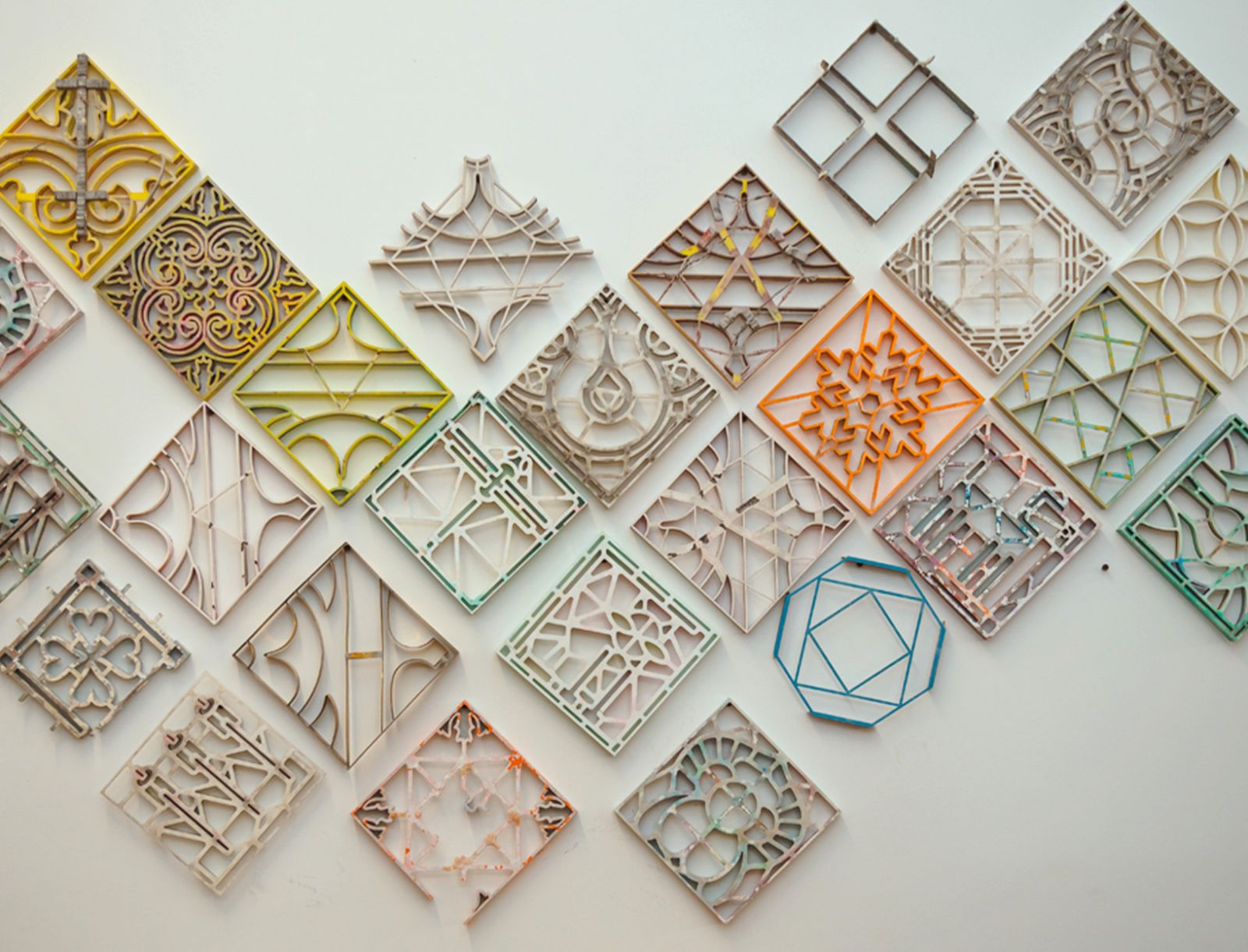
As part of the professional event, we organized two sessions. During the conference, we gave a presentation to the participants on the architectural-historical and technological characteristics of cement tile and terrazzo flooring, and then—in keeping with the Art Nouveau theme of the event—we provided a glimpse into the behind-the-scenes work of our renovation project on one of the most important Art Nouveau historic building facades, the former Austro-Hungarian Bank, now known as the Hungarian National Bank.
As part of the professional event, we organized two sessions. During the conference, we gave a presentation to the participants on the architectural-historical and technological characteristics of cement tile and terrazzo flooring, and then—in keeping with the Art Nouveau theme of the event—we provided a glimpse into the behind-the-scenes work of our renovation project on one of the most important Art Nouveau historic building facades, the former Austro-Hungarian Bank, now known as the Hungarian National Bank.
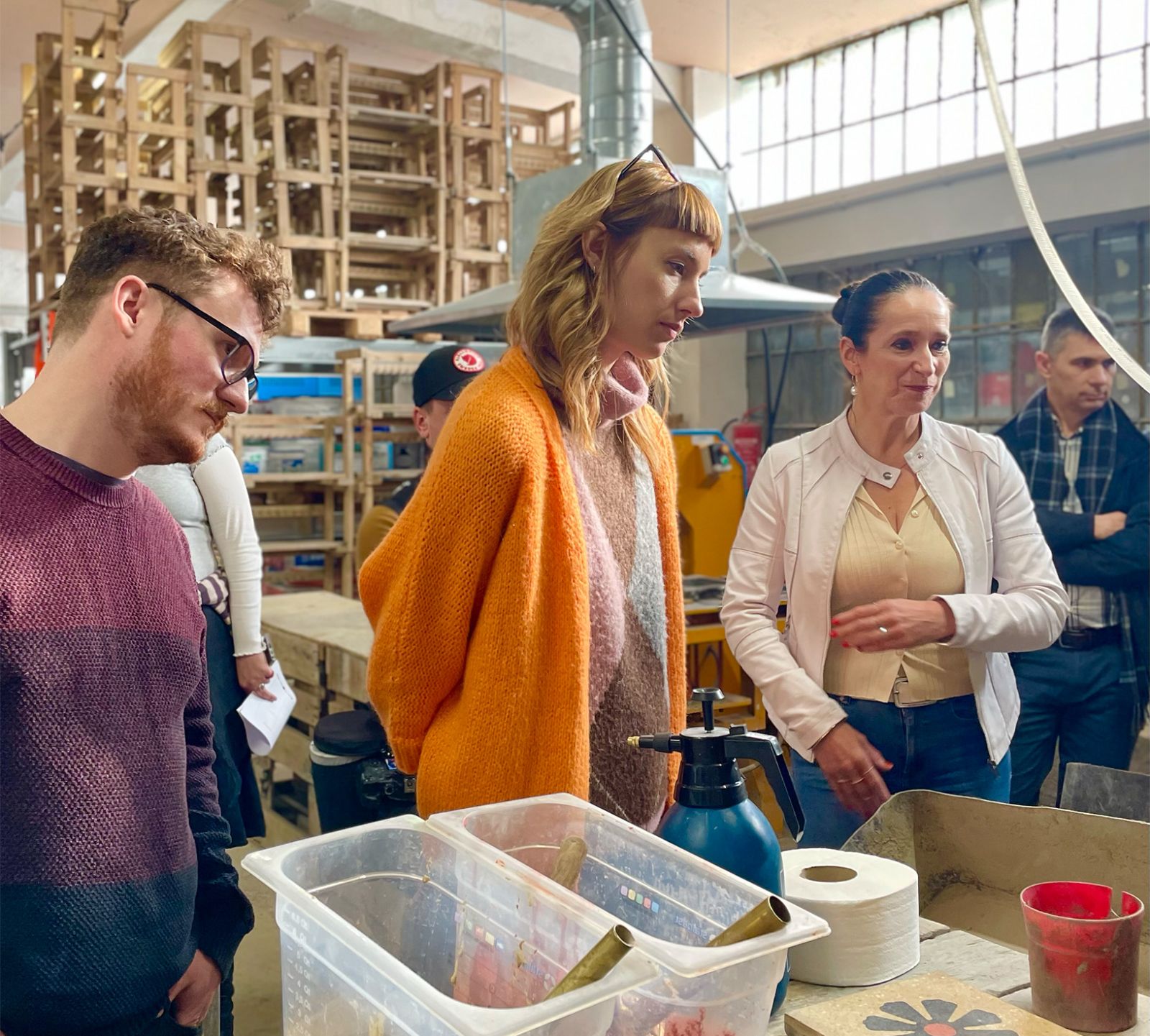
The hands-on part of the event was a terrazzo slab casting workshop. We ourselves were eagerly and excitedly awaiting the eight lucky participants who would be the first to register and get to try their hand at slab casting. Among the participants, we welcomed lay enthusiasts, architects, staff from KISKÉPZŐ—the Secondary School and Boarding School of Fine and Applied Arts—staff from the Museum of Applied Arts, as well as restorers and construction industry professionals.
To our great delight, we were able to welcome Simon Wintermans not only as a guest at the event but also as a participant in the workshop. His passion is the preservation of old cement and terrazzo tile coverings; visitors can view his collection at the Cement Tile Museum, which he has established in the attic of his farmhouse in Erzsébet.
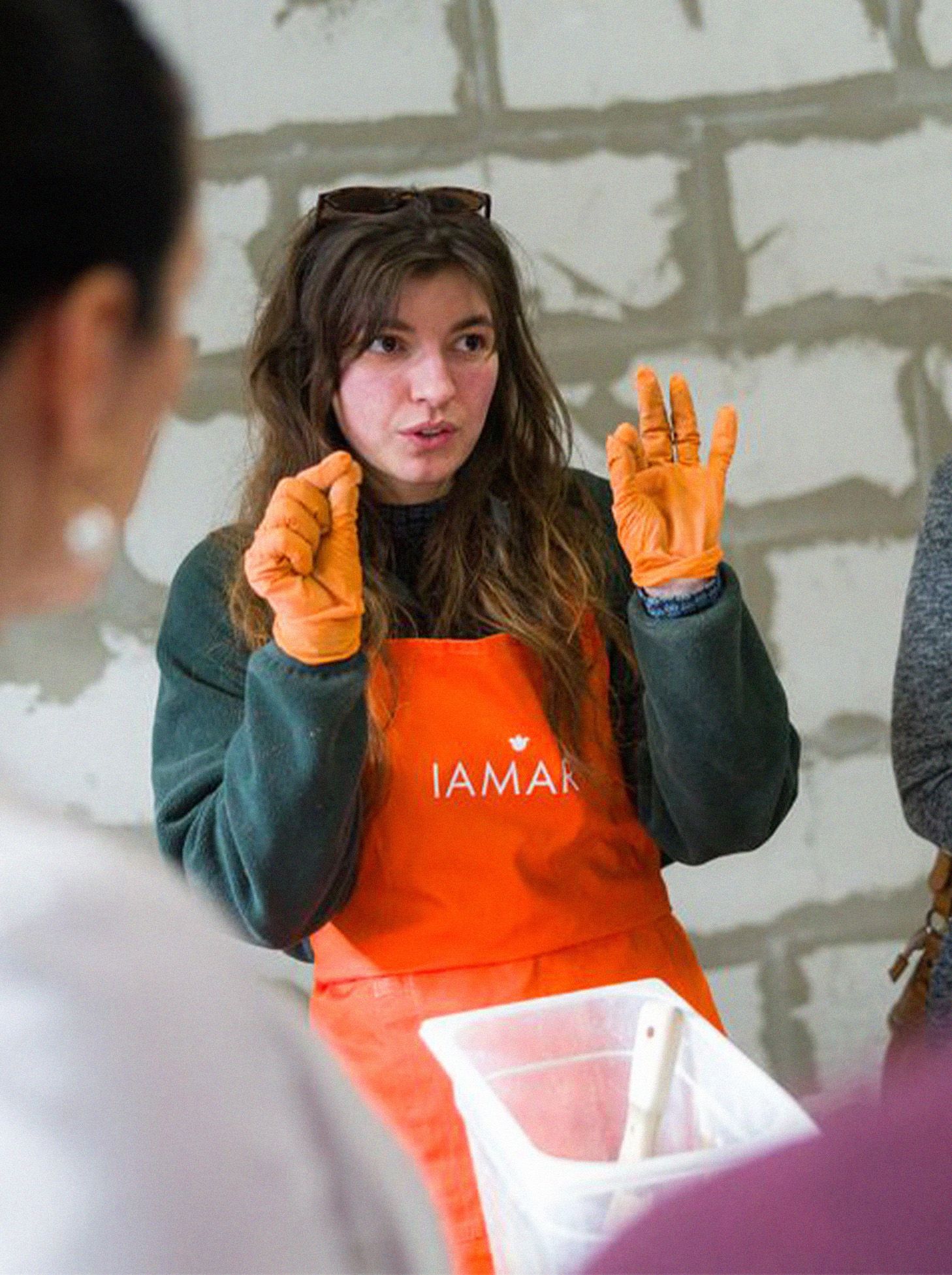
The practical part of the workshop was led by our colleagues Gréta Likár and Bori Lelkes.
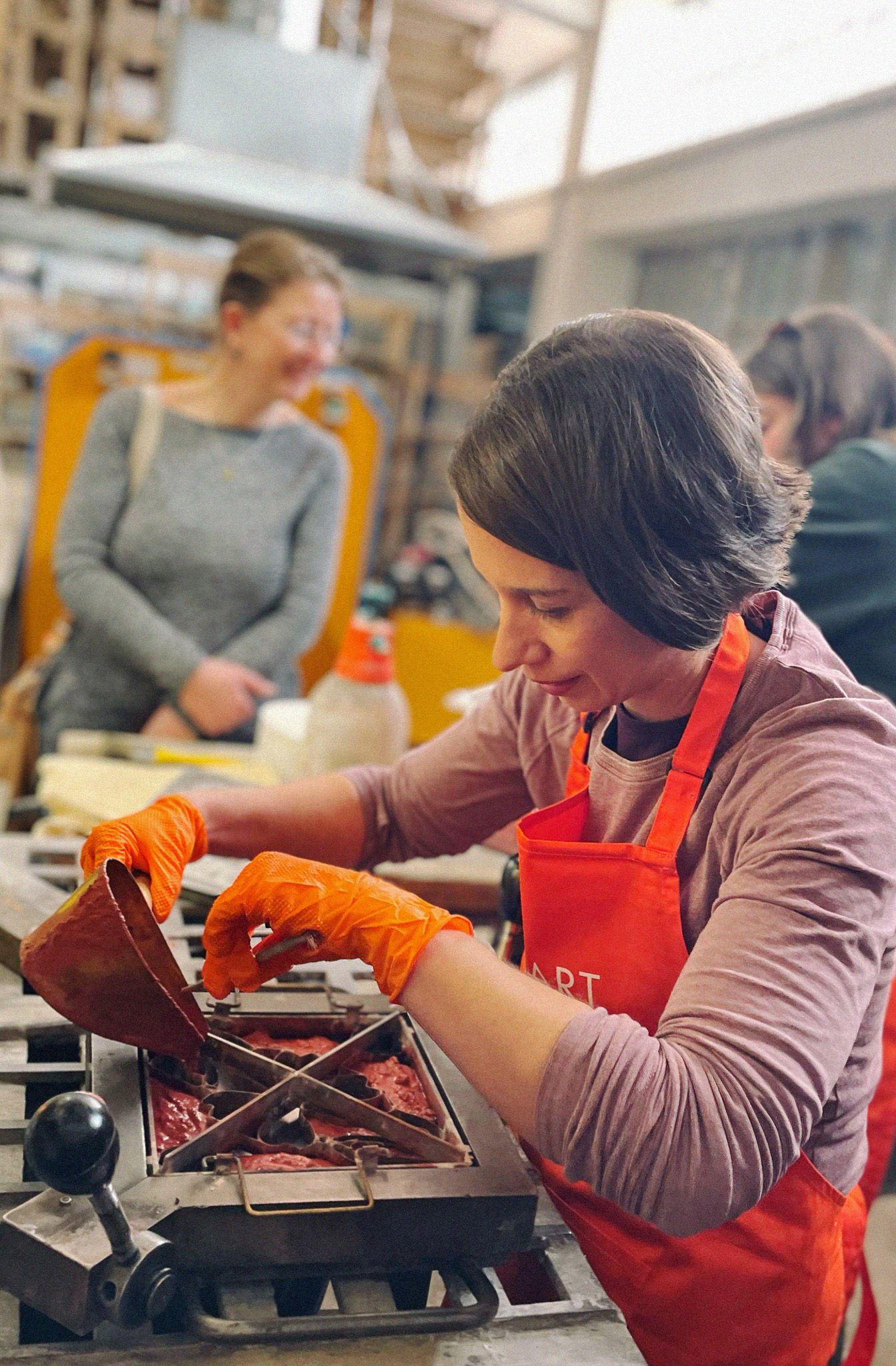
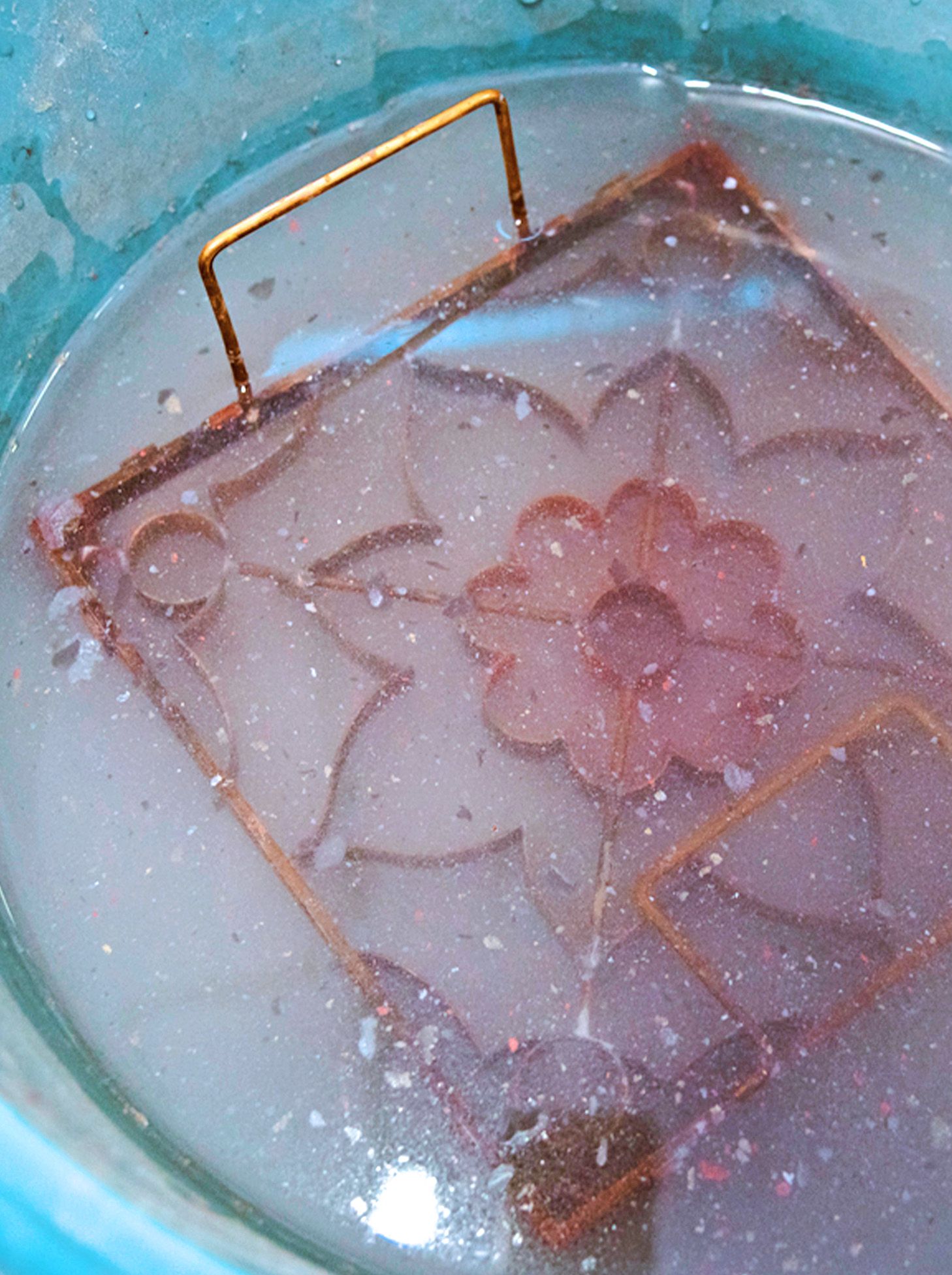
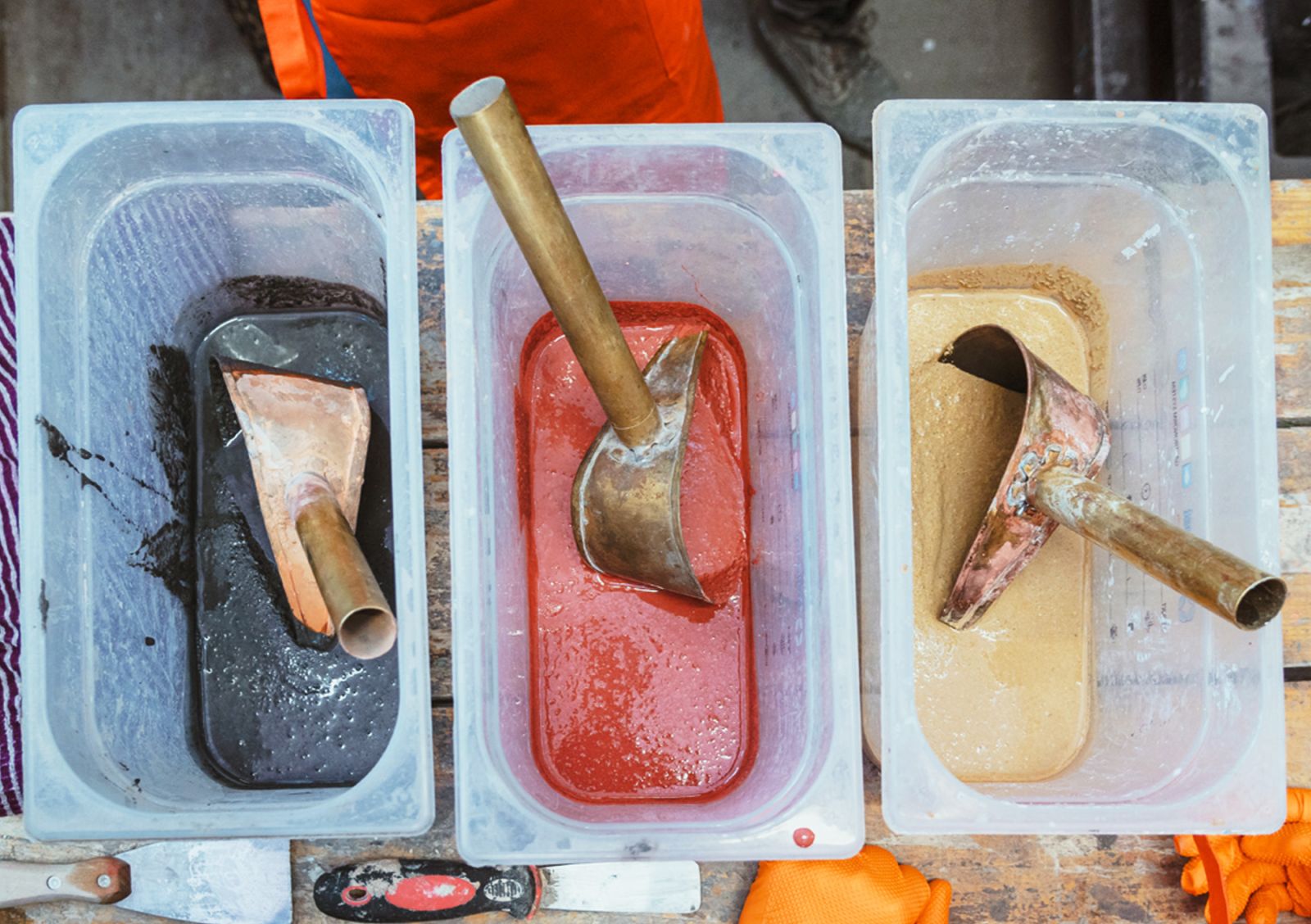
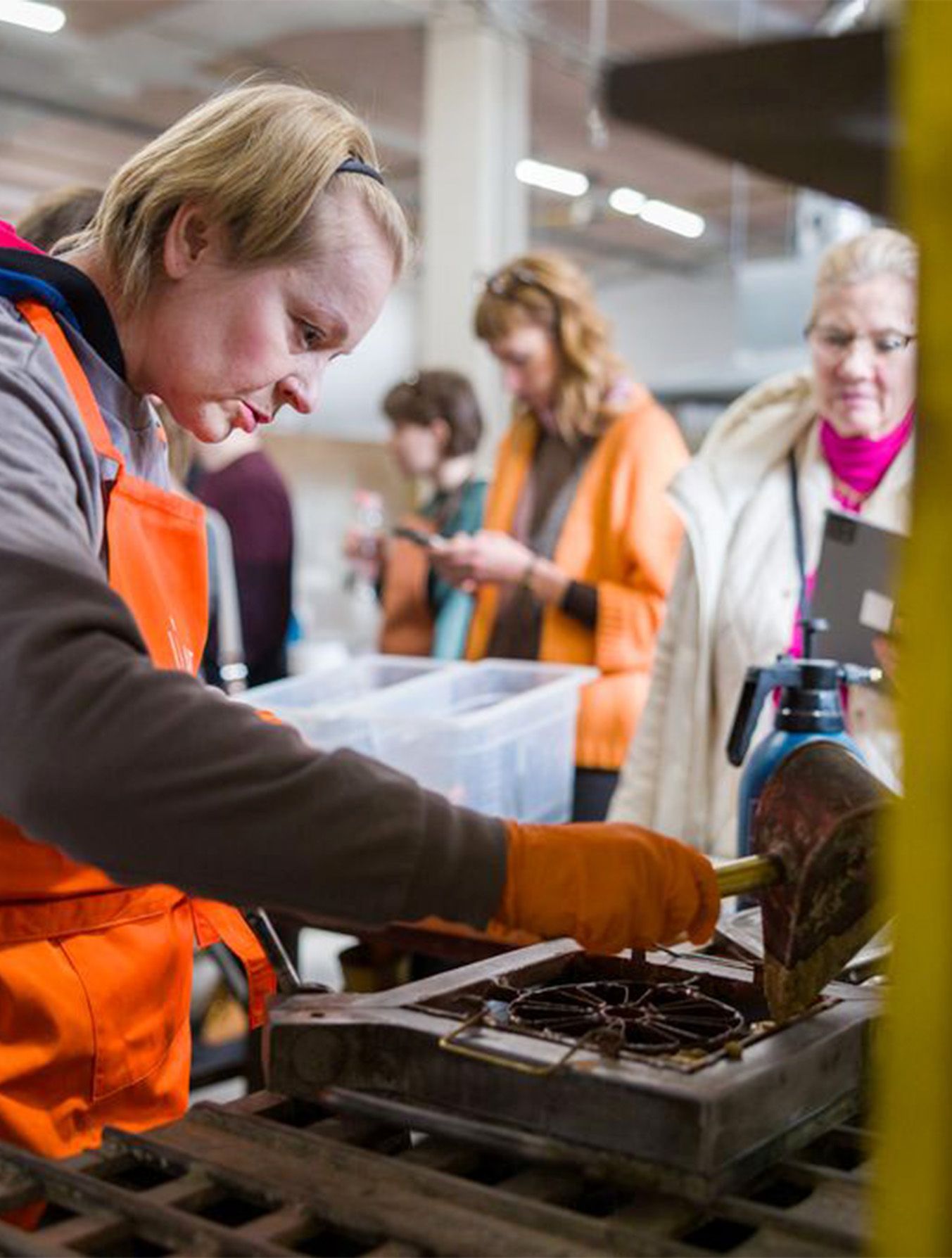
They introduced the participants to the craft’s demanding work, which requires constant concentration, precision, and physical strength. Due to time constraints, the participants were only involved in the casting process; the selection of patterns and pigments, and the preparatory and finishing work were carried out by us to speed up the multi-step process and to allow participants to become acquainted with the many challenges of sheet casting through the creative and experiential aspects of the work.
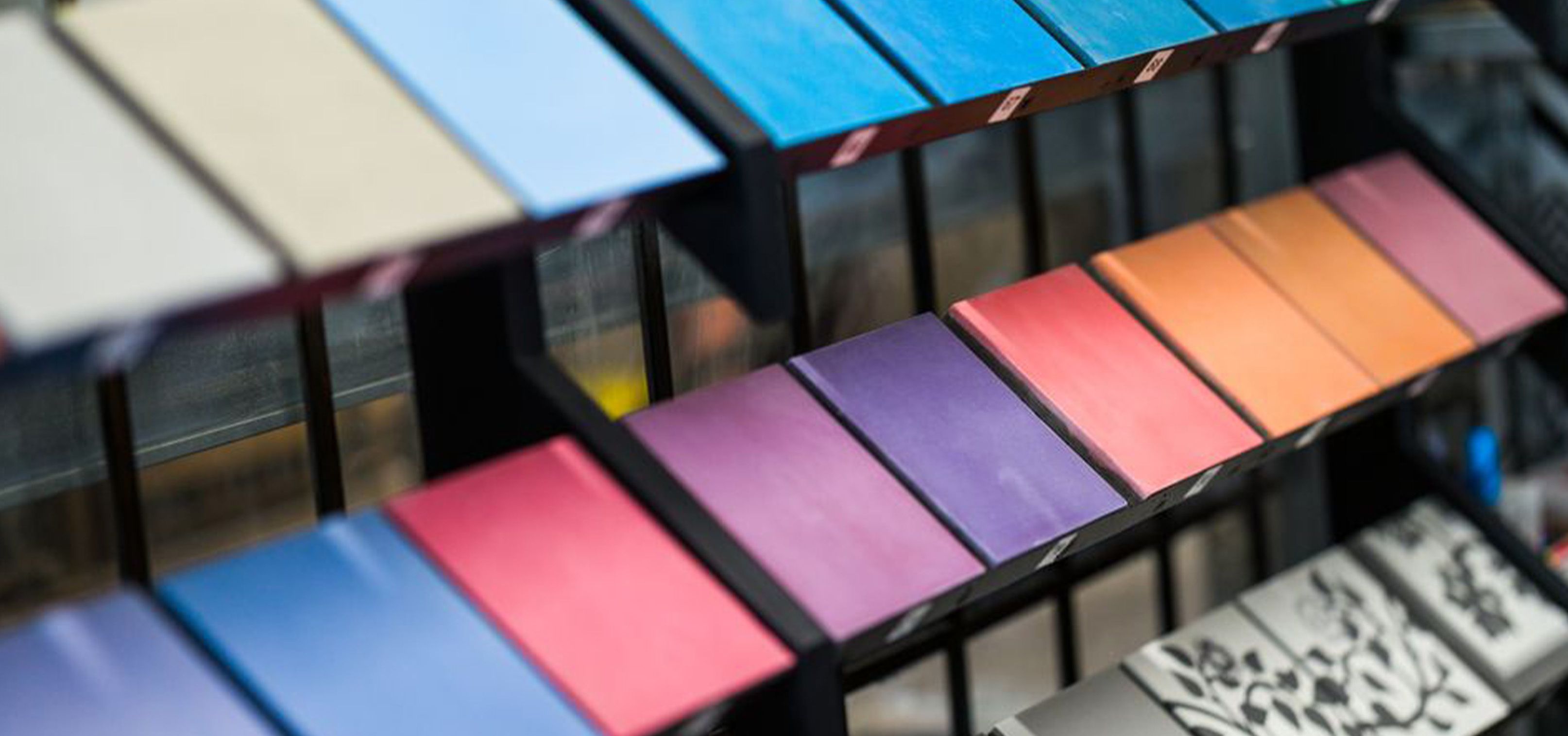
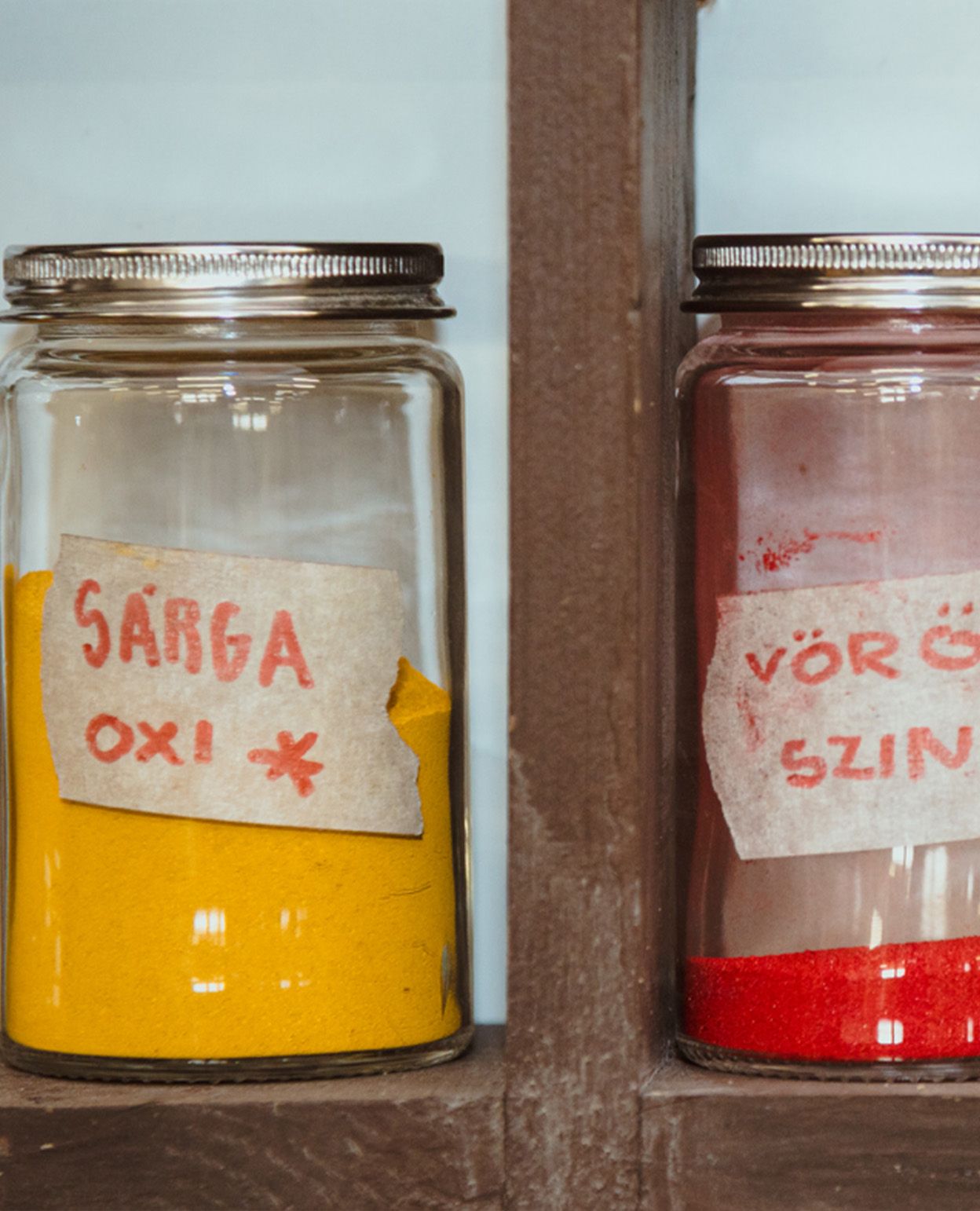
We handled the selection of samples and color design ourselves, using the
Custom Color Designer available on the Iamart website, supplemented by our practical experience and the wide selection of color palettes and samples available in our showroom.
The use of cement-based tiles became widespread across Europe at the same time. In the second half of the 19th century, around 1850, a new technology was discovered in France that enabled the mass production of cold-pressed tiles without the need for firing to achieve the required strength. In Hungary, the production of cement products also began during this same period. In our country, the construction of the cladding for numerous historic buildings is associated with the names of József Walla and the Mellocco factory.
The hands-on part of the event was a terrazzo slab casting workshop. We ourselves were eagerly and excitedly awaiting the eight lucky participants who would be the first to register and get to try their hand at slab casting. Among the participants, we welcomed lay enthusiasts, architects, staff from KISKÉPZŐ—the Secondary School and Boarding School of Fine and Applied Arts—staff from the Museum of Applied Arts, as well as restorers and construction industry professionals.
To our great delight, we were able to welcome Simon Wintermans not only as a guest at the event but also as a participant in the workshop. His passion is the preservation of old cement and terrazzo tile coverings; visitors can view his collection at the Cement Tile Museum, which he has established in the attic of his farmhouse in Erzsébet.
The practical part of the workshop was led by our colleagues Gréta Likár and Bori Lelkes.
They introduced the participants to the craft’s demanding work, which requires constant concentration, precision, and physical strength. Due to time constraints, the participants were only involved in the casting process; the selection of patterns and pigments, and the preparatory and finishing work were carried out by us to speed up the multi-step process and to allow participants to become acquainted with the many challenges of sheet casting through the creative and experiential aspects of the work.
We handled the selection of samples and color design ourselves, using the
Custom Color Designer available on the Iamart website, supplemented by our practical experience and the wide selection of color palettes and samples available in our showroom.
The use of cement-based tiles became widespread across Europe at the same time. In the second half of the 19th century, around 1850, a new technology was discovered in France that enabled the mass production of cold-pressed tiles without the need for firing to achieve the required strength. In Hungary, the production of cement products also began during this same period. In our country, the construction of the cladding for numerous historic buildings is associated with the names of József Walla and the Mellocco factory.
After many years of persistent effort, the Iamart factory succeeded in launching the production of cement and terrazzo tiles; the Csepel plant began operations in 2017. The difficulty and beauty of the manufacturing process lie in the artisanal techniques used, which ensure that the tiles’ appearance is entirely consistent with that of period pieces, while also allowing for the realization of personalized, unique, and contemporary designs.
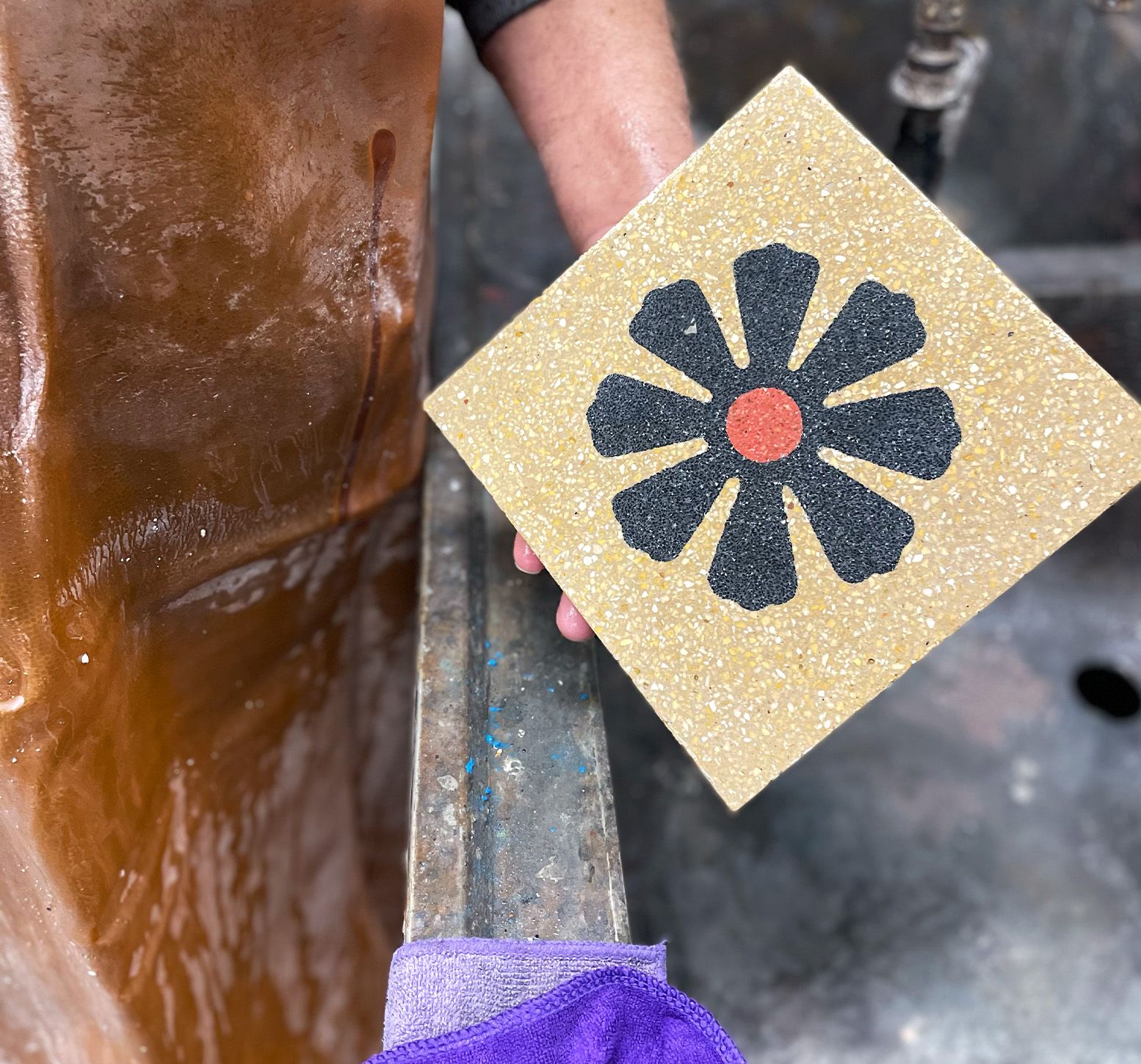
Historically, terrazzo tile coverings had two precursors in the flourishing architecture of the 19th century. One was the so-called “Venetian terrazzo,” made on-site with coarse-grained, genuine, hand-laid mosaics; the other was terrazzo flooring, also cast on-site, which was cement-bound and contained not genuine mosaics but only ground natural stone and marble.
Terrazzo tiles are recognized in practice and in the literature as a durable, antique-style covering; nothing illustrates this better than the fact that they are listed in the Walláék catalog as “marble mosaic tiles,” a reference to the covering’s antique origins that enhances its value.
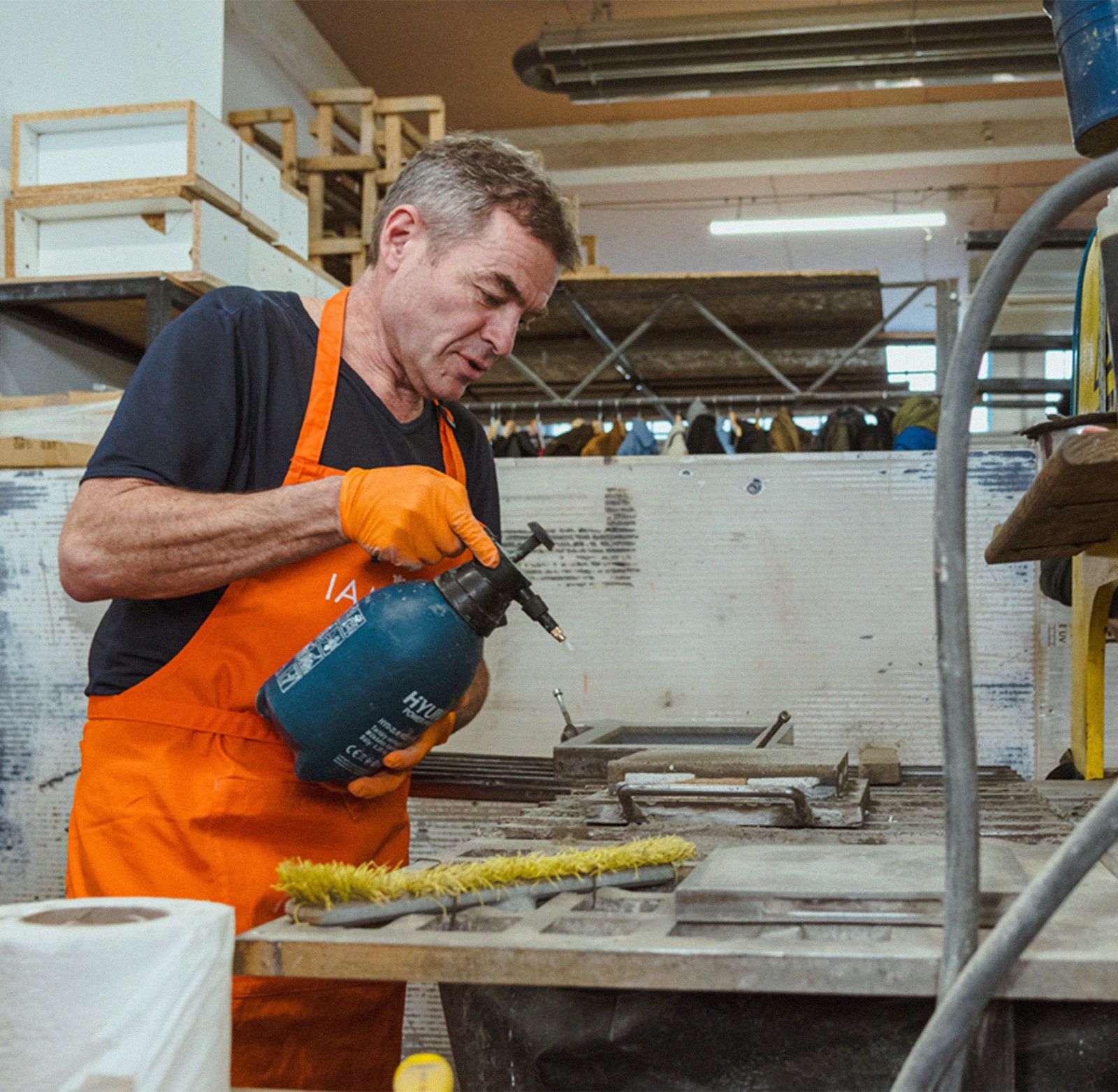
After many years of persistent effort, the Iamart factory succeeded in launching the production of cement and terrazzo tiles; the Csepel plant began operations in 2017. The difficulty and beauty of the manufacturing process lie in the artisanal techniques used, which ensure that the tiles’ appearance is entirely consistent with that of period pieces, while also allowing for the realization of personalized, unique, and contemporary designs.
Historically, terrazzo tile coverings had two precursors in the flourishing architecture of the 19th century. One was the so-called “Venetian terrazzo,” made on-site with coarse-grained, genuine, hand-laid mosaics; the other was terrazzo flooring, also cast on-site, which was cement-bound and contained not genuine mosaics but only ground natural stone and marble.
Terrazzo tiles are recognized in practice and in the literature as a durable, antique-style covering; nothing illustrates this better than the fact that they are listed in the Walláék catalog as “marble mosaic tiles,” a reference to the covering’s antique origins that enhances its value.
Cement tiles are a simpler, more affordable, and decorative alternative to terrazzo tiles.
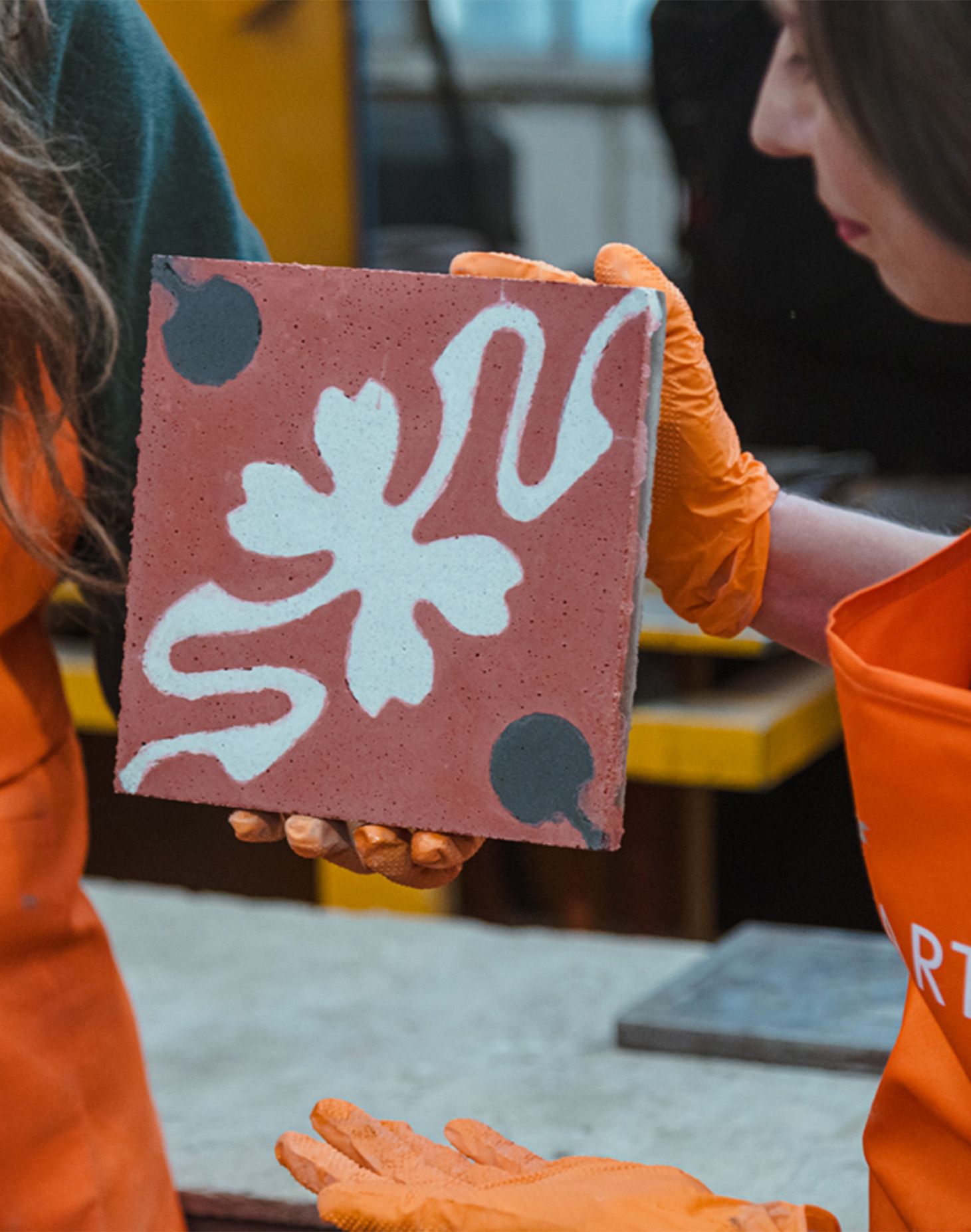
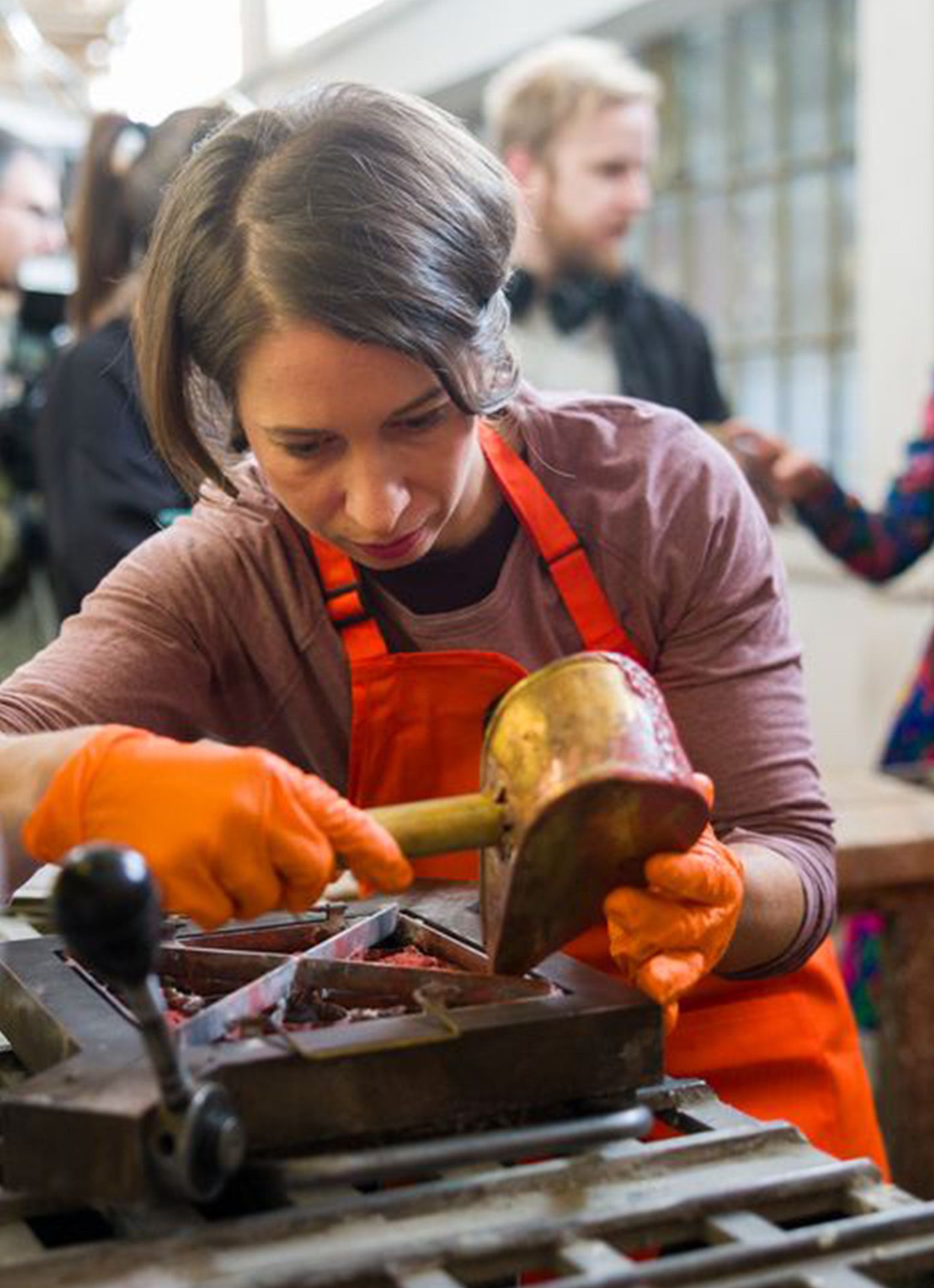
We recommended that workshop participants pour terrazzo flooring because the natural stone particles mixed into the paste help make the compressed tiles easier to remove without the wet paste falling apart. Our novice casters set to work with tremendous enthusiasm; Gréta and Bori were constantly on hand at the casting stations. The excitement swept up even the guests not participating in the casting, and everyone cheered on the casters. The sense of achievement was palpable. Not only because every participant managed to cast their own terrazzo tile, but because every guest who left had a smile on their face from the experience, which meant more to us than anything else.
We would like to thank you for the partnership, and for the unique experience and your participation.
The professional program was organized by Dr. Beatrix Torma, Artistic Director, and Csaba Fehérdi, Founder.
Our professional partner for the event was the Museum of Applied Arts, represented by Dr. Júlia Katona, art historian, museologist, and research project leader, and Dalma Pszota, research assistant.
We would like to thank Mihály Nagy (magyarepitok.hu) and the Museum of Applied Arts for the photos.
We are also grateful to our colleagues who helped with the several weeks of preparation for the event and the running of the workshop. They are Bori Lelkes, Gréta Likár, Ervin Eduardo Cseh, and Eszter Sára Göcsei, and we also thank those colleagues who handled the on-site logistics, thereby ensuring the Team’s smooth operation.
Cement tiles are a simpler, more affordable, and decorative alternative to terrazzo tiles.
We recommended that workshop participants pour terrazzo flooring because the natural stone particles mixed into the paste help make the compressed tiles easier to remove without the wet paste falling apart. Our novice casters set to work with tremendous enthusiasm; Gréta and Bori were constantly on hand at the casting stations. The excitement swept up even the guests not participating in the casting, and everyone cheered on the casters. The sense of achievement was palpable. Not only because every participant managed to cast their own terrazzo tile, but because every guest who left had a smile on their face from the experience, which meant more to us than anything else.
We would like to thank you for the partnership, and for the unique experience and your participation.
The professional program was organized by Dr. Beatrix Torma, Artistic Director, and Csaba Fehérdi, Founder.
Our professional partner for the event was the Museum of Applied Arts, represented by Dr. Júlia Katona, art historian, museologist, and research project leader, and Dalma Pszota, research assistant.
We would like to thank Mihály Nagy (magyarepitok.hu) and the Museum of Applied Arts for the photos.
We are also grateful to our colleagues who helped with the several weeks of preparation for the event and the running of the workshop. They are Bori Lelkes, Gréta Likár, Ervin Eduardo Cseh, and Eszter Sára Göcsei, and we also thank those colleagues who handled the on-site logistics, thereby ensuring the Team’s smooth operation.
