BESPOKE TERRAZZO TILE
In the Land of Wheat Ears
WORDS AND PHOTOGRAPHY: BEATRIX TORMA
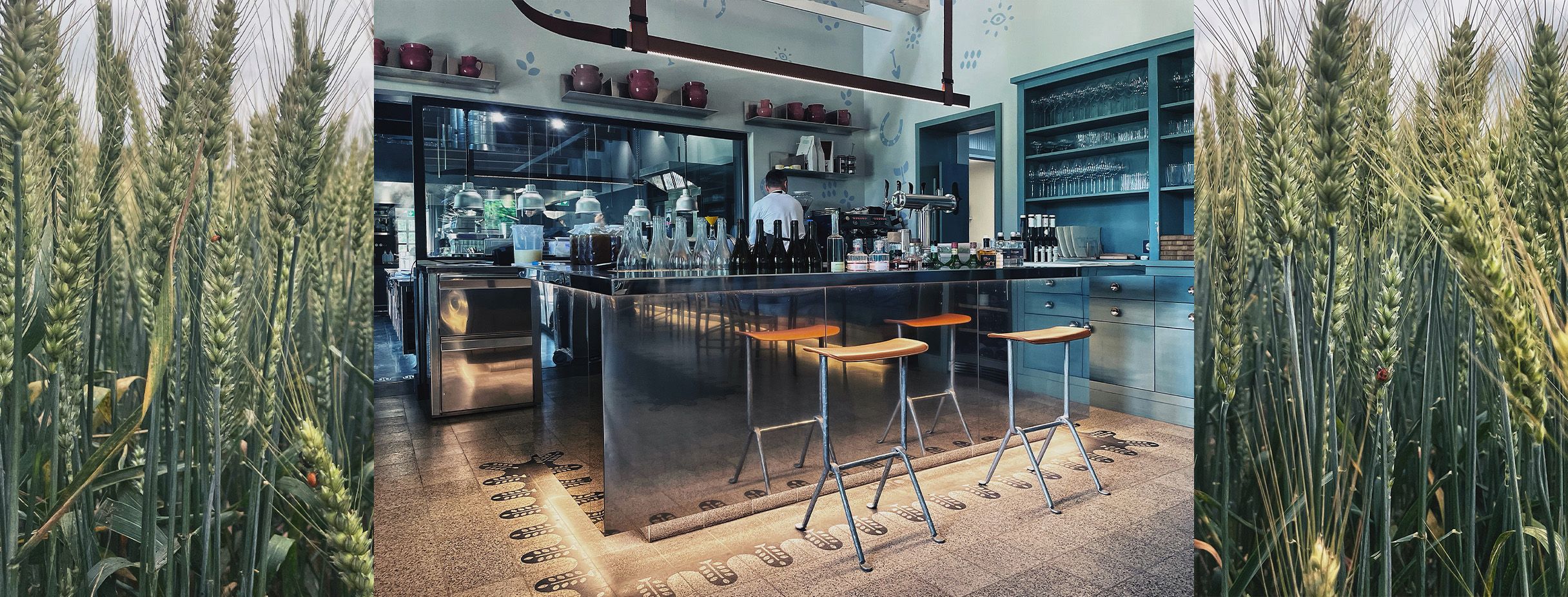
The ear of wheat is one of the most ancient motifs in human civilization. This motif, which symbolizes abundance, renewal, and the eternal cycle of nature, appears in the custom-designed terrazzo flooring of the Papi restaurant and farm, which reimagines the family’s heritage.
BESPOKE TERRAZZO TILE
PAPI RESTAURANT AND FARM
“This story begins where life ends, and according to the eternal cycle of things, something new sprouts at the end of life… I have become the one who creates something new from my father’s legacy, and I will pass it on to my own children, since I, too, have become a father in the meantime…”
The owner of the place is Hubert Hlatky-Schlichter, and these are his words. Hubert took his father’s former riding stable and transformed it into a “farm-to-fork” establishment that offers a love of the land and high-quality cuisine, combining the natural advantages of the several-hectare area along the Danube with his own talents and those of his team.
The interior design concept sought to reflect the original heritage (the riding arena), the landscape, and nature within the interior spaces, paying tribute to everything that made the project possible and emphasizing the values upon which the farm and its future are being built. In the inspirational collage by civil engineer Ákos Bosznay, who designed the unique terrazzo pattern, we can see numerous materials based on traditional, artisanal techniques—such as wicker and clay.
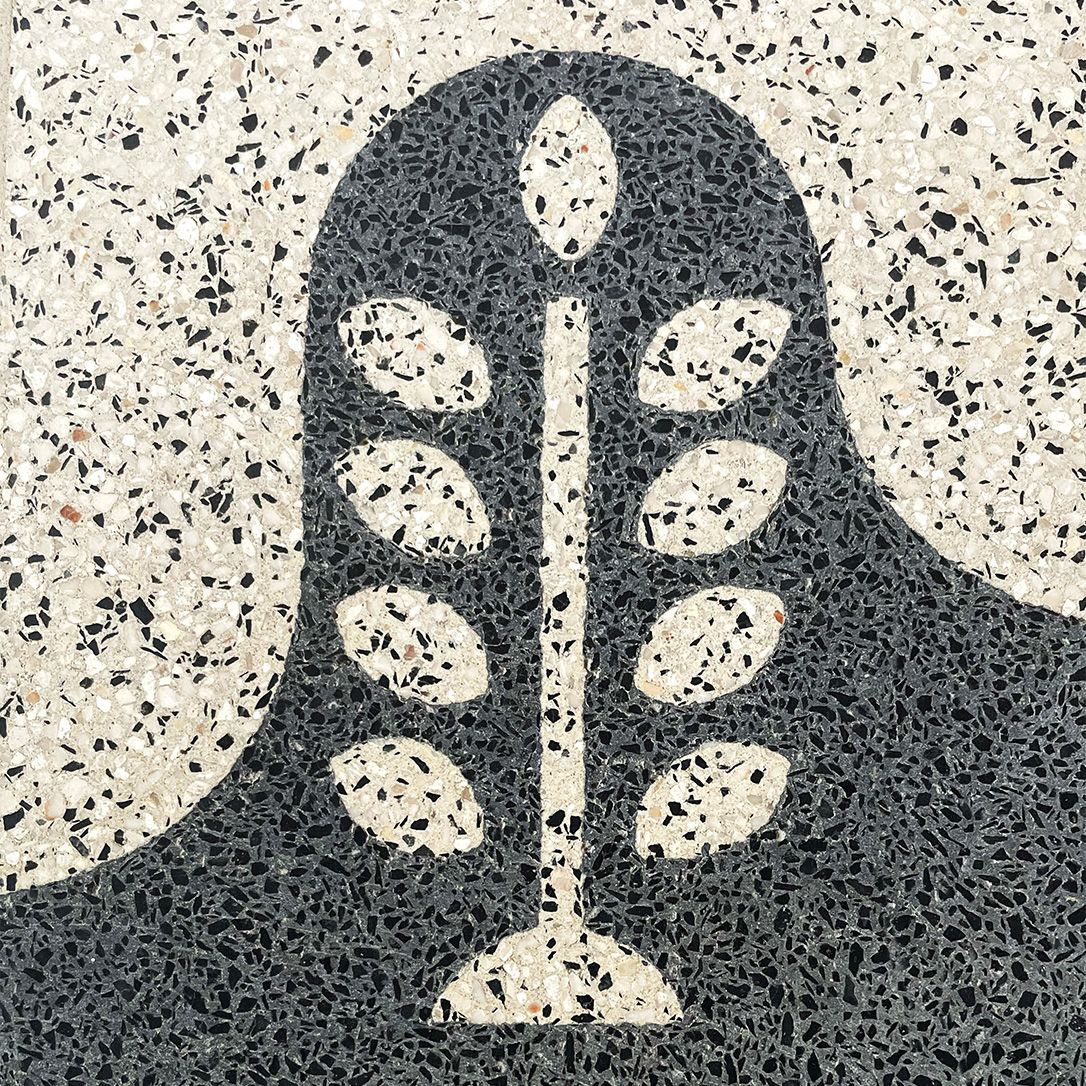
The schematic wheat ear motif, which has become the visual symbol of the Papi restaurant, was inspired by a traditional blue-dyed pattern, Dezső Korniss’s work titled *Miska*, and a collection of motifs from a contemporary Art Nouveau cement tile (The “miskakancsó” was originally a lead-glazed, conical pepper pot primarily produced in pottery workshops in the Middle Tisza region and the Great Plain.)
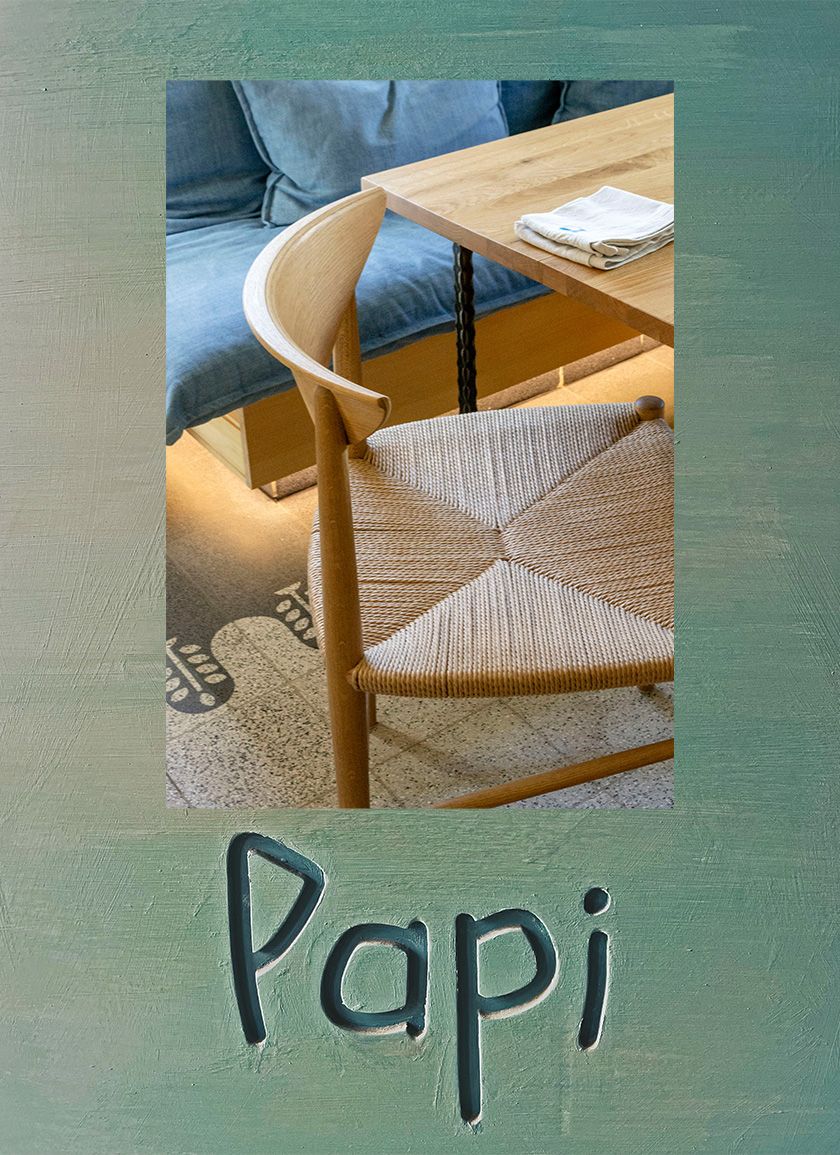
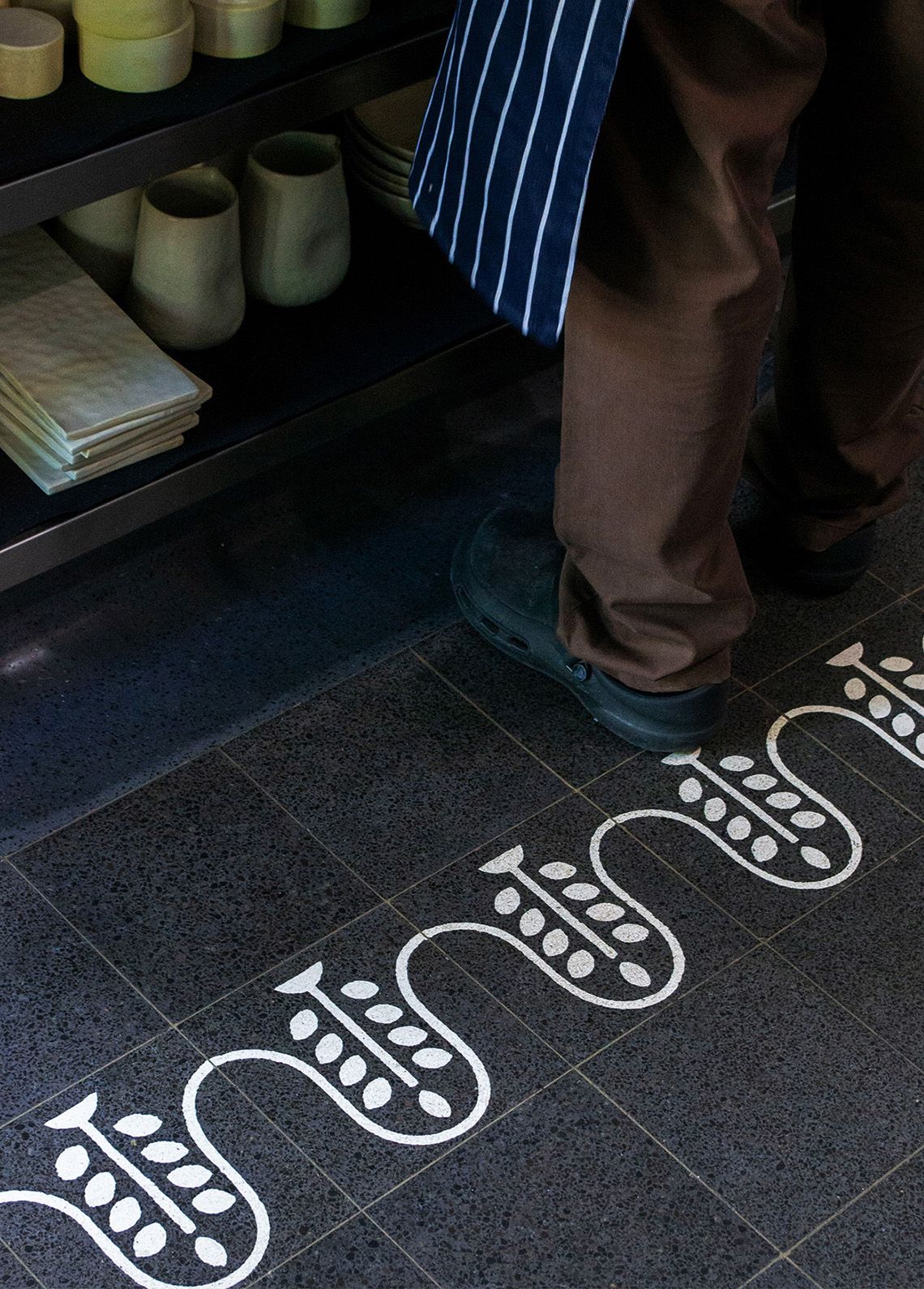
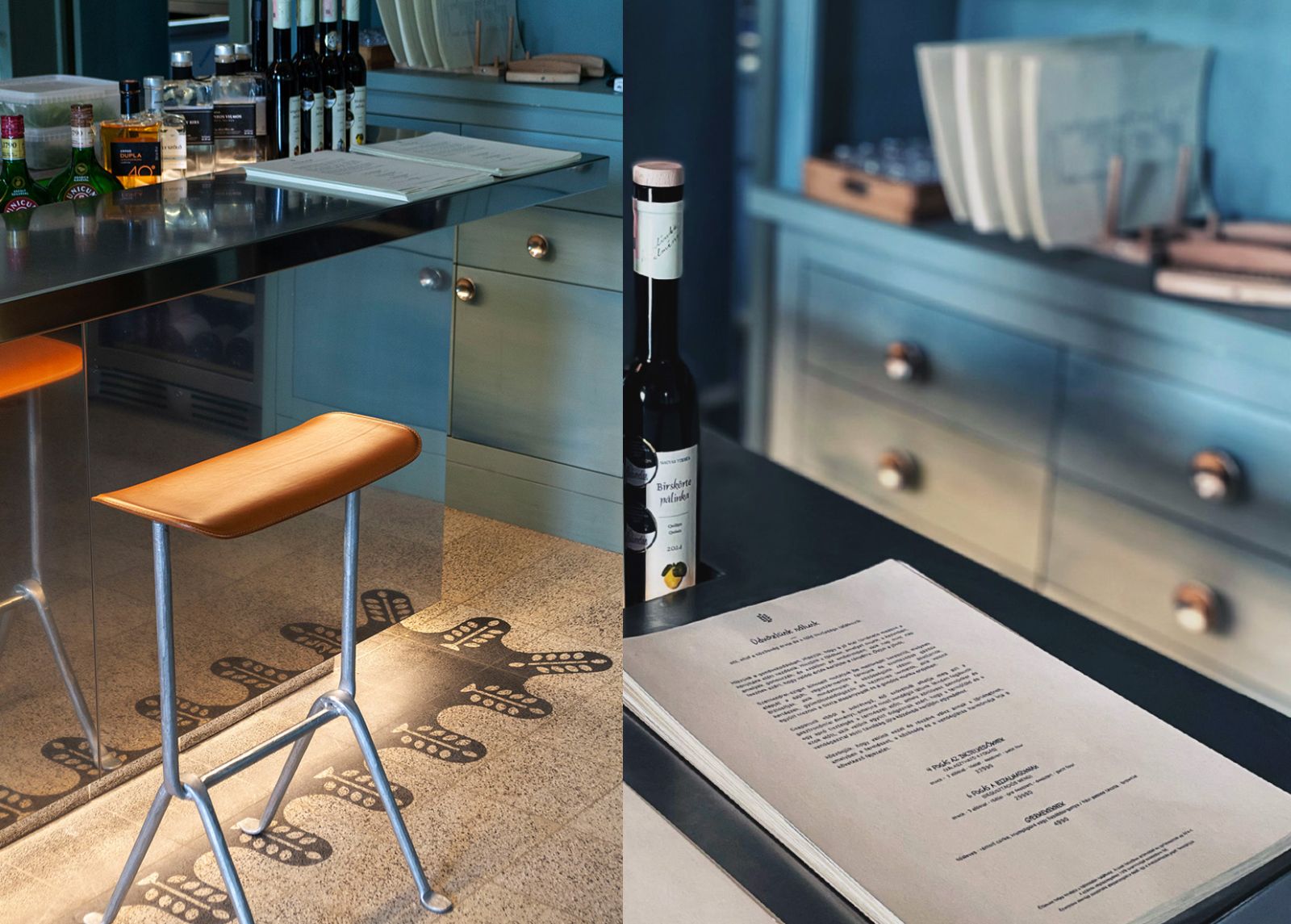
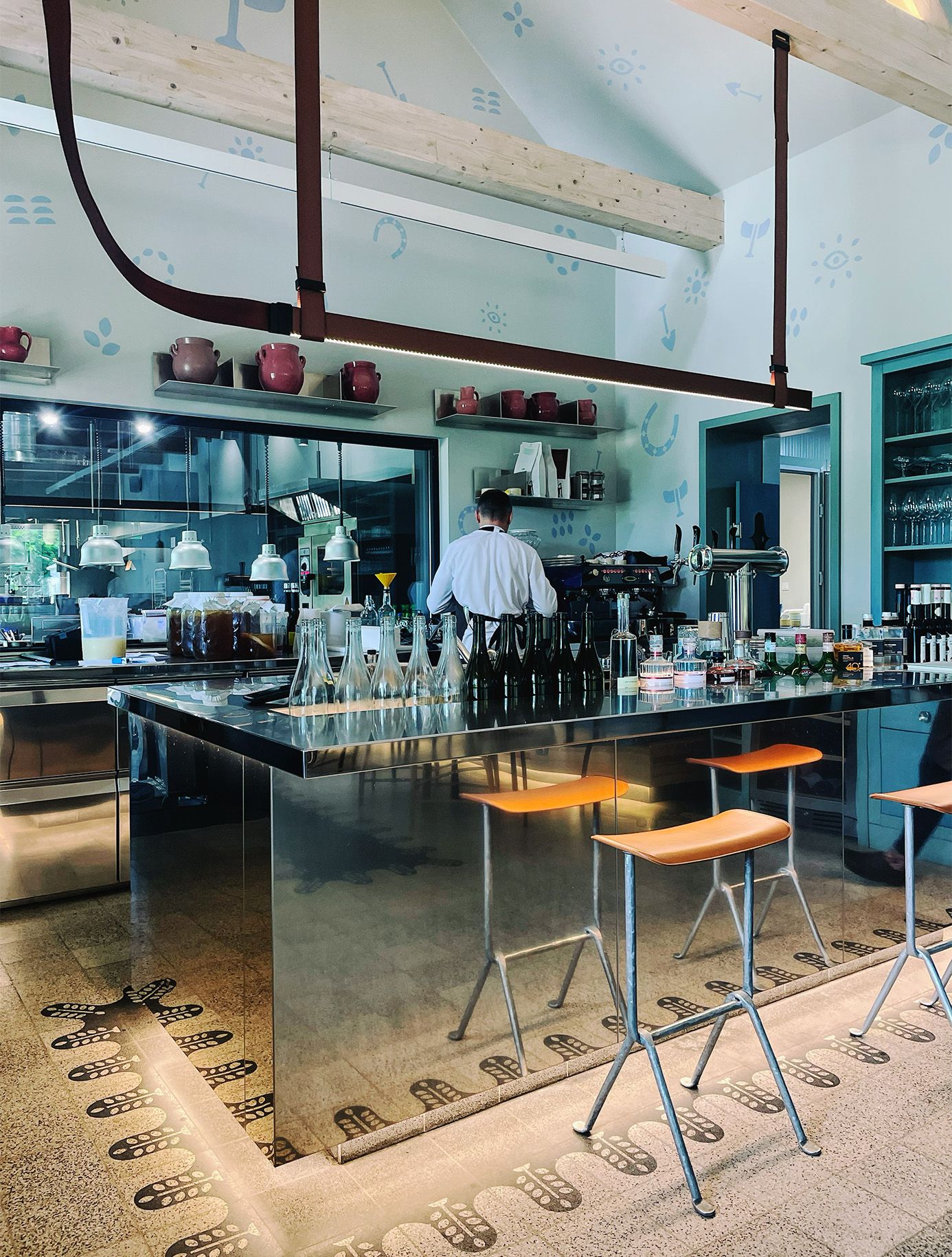
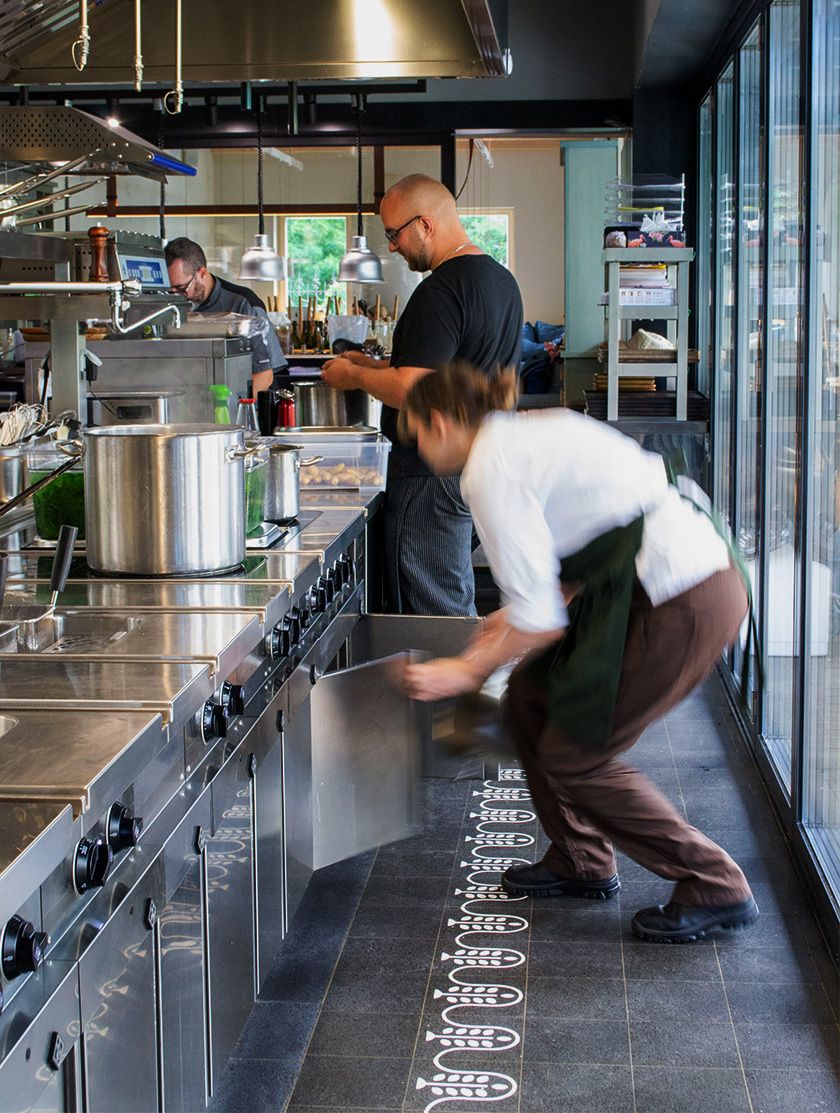
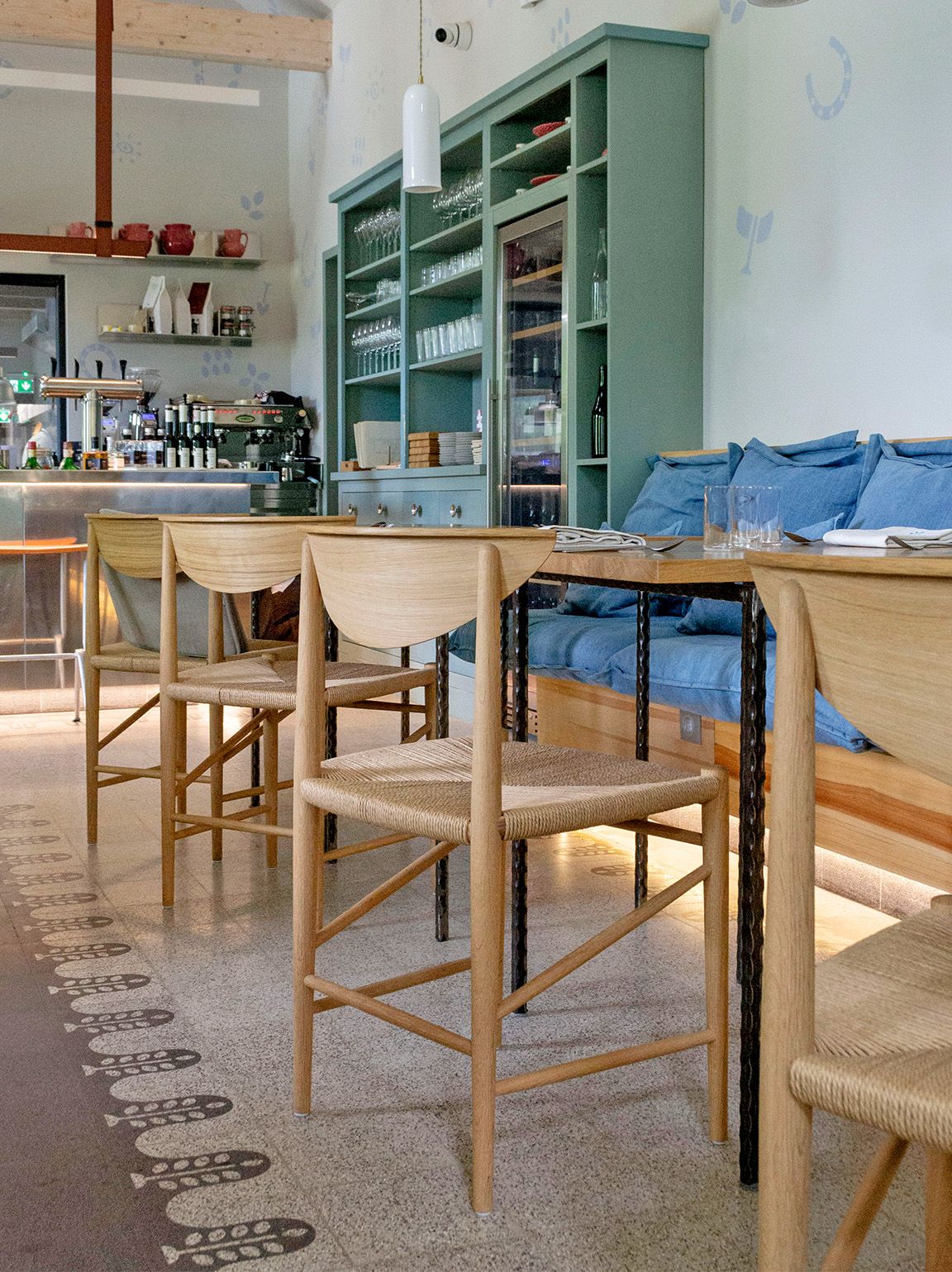
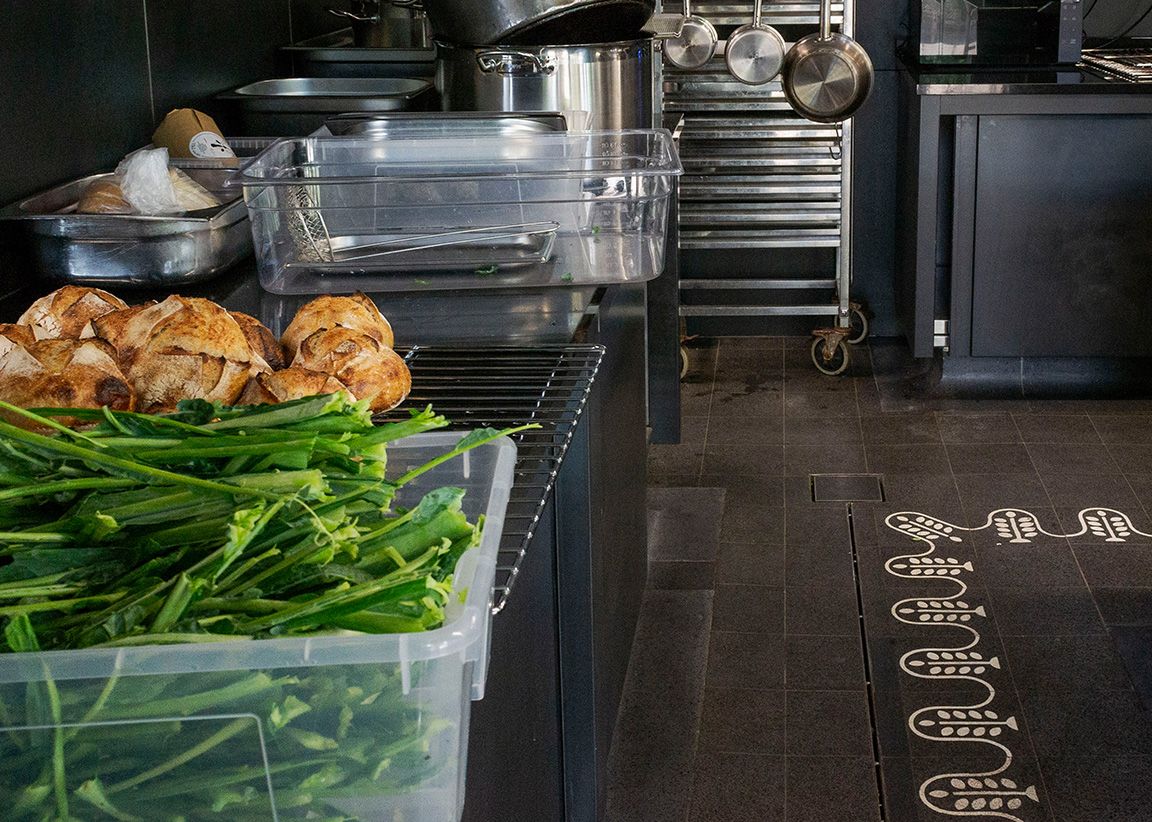
Handcrafted terrazzo tiles bring an ancient motif into the contemporary space
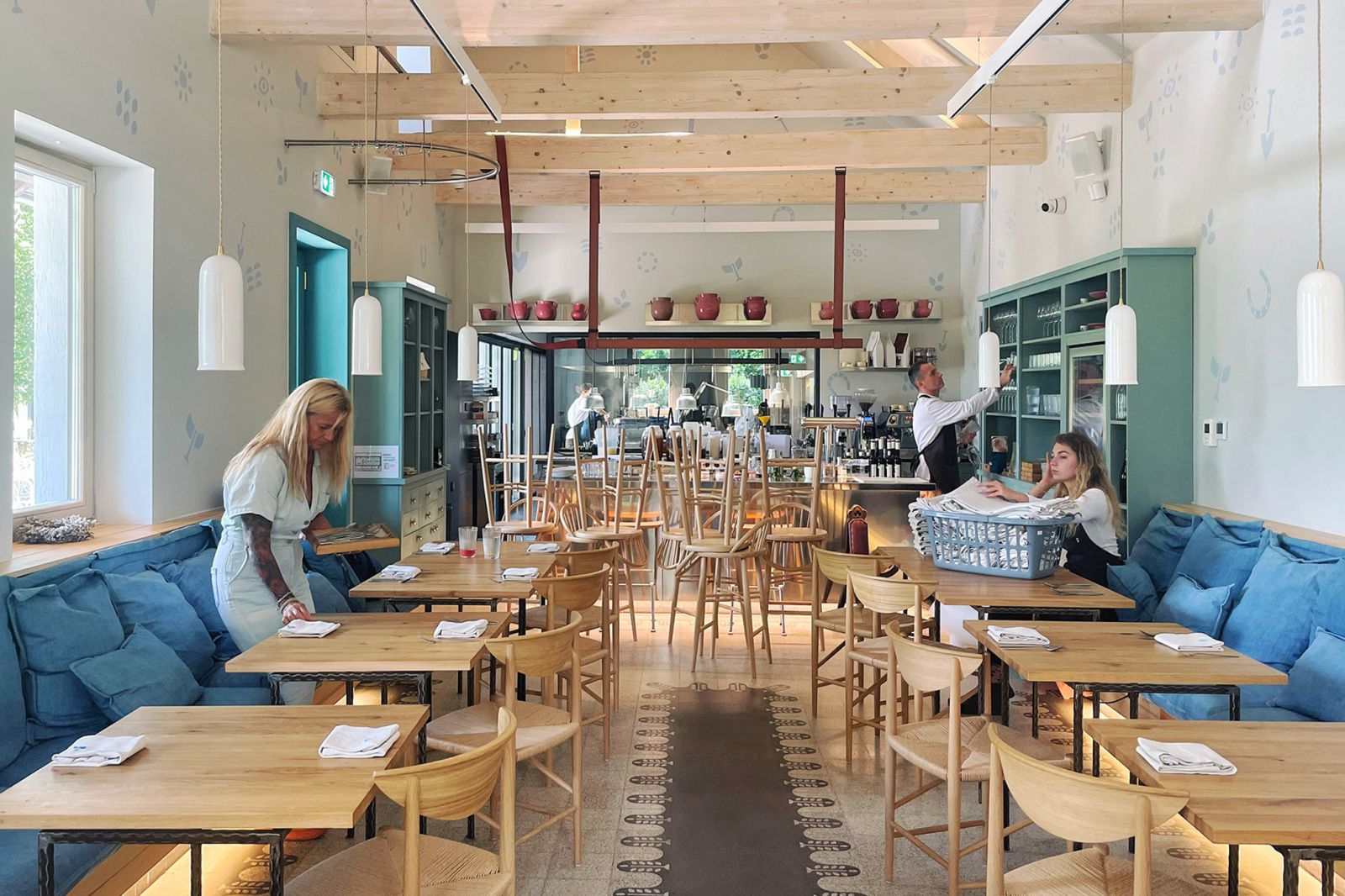
The civil engineer’s drawings clearly show how the complex pattern system—featuring custom designs, carpet-like elements, and corner pieces—manufactured by Iamart came to be, a system that appears in both the kitchen and the dining area.
The organic motif, rich in meaning, creates a perfect balance between simple, nature-inspired elegance and modern spatial design. The custom-designed, handcrafted, and through-colored terrazzo tiles, thanks to our traditional pressing technology, align beautifully with the Papi restaurant’s timeless and quality-driven philosophy.
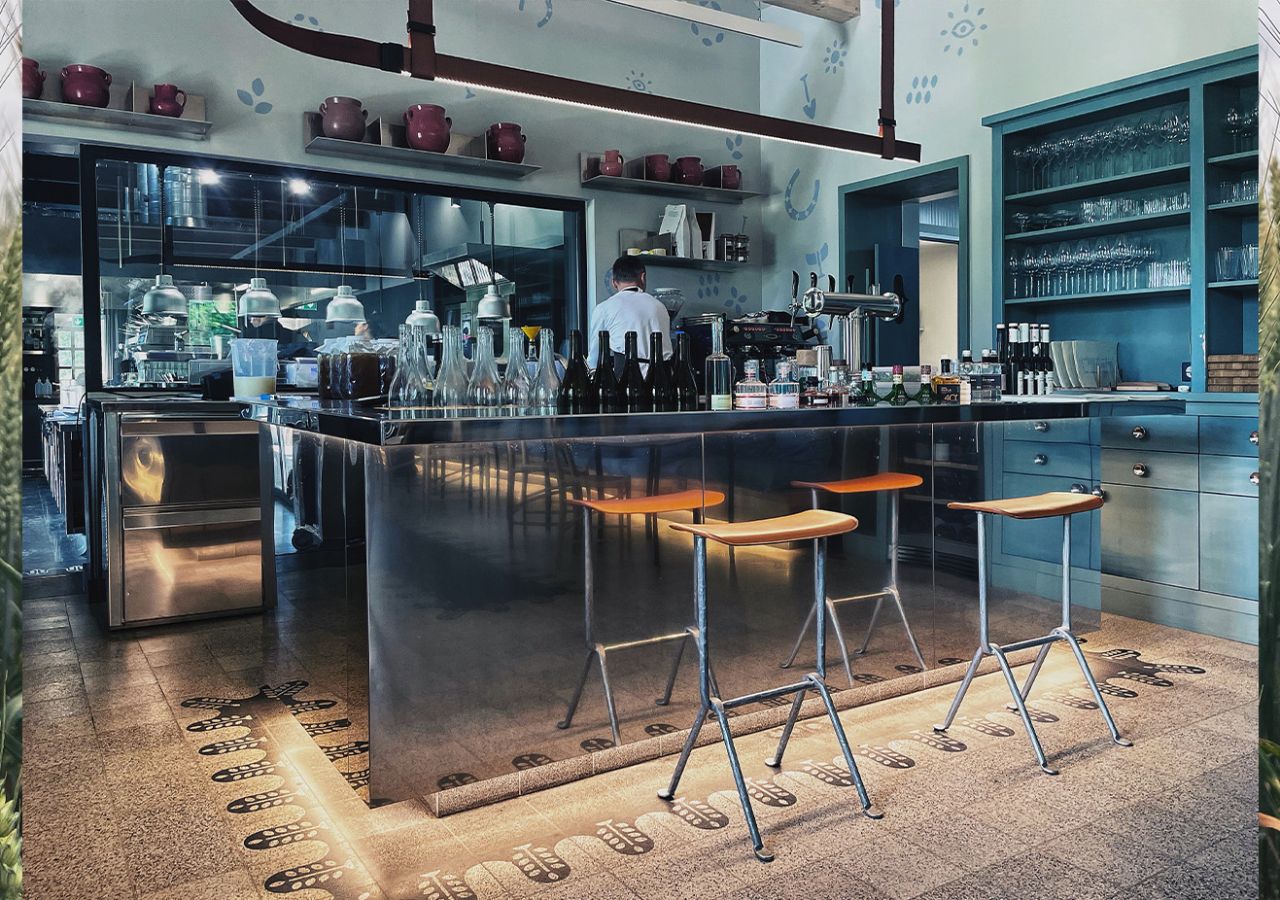
The classic black and raw off-white color palette of the terrazzo tiles is understated in the dining area, while in the kitchen—where curved terrazzo elements connect to the countertop—it lends the spaces a distinctly contemporary feel.
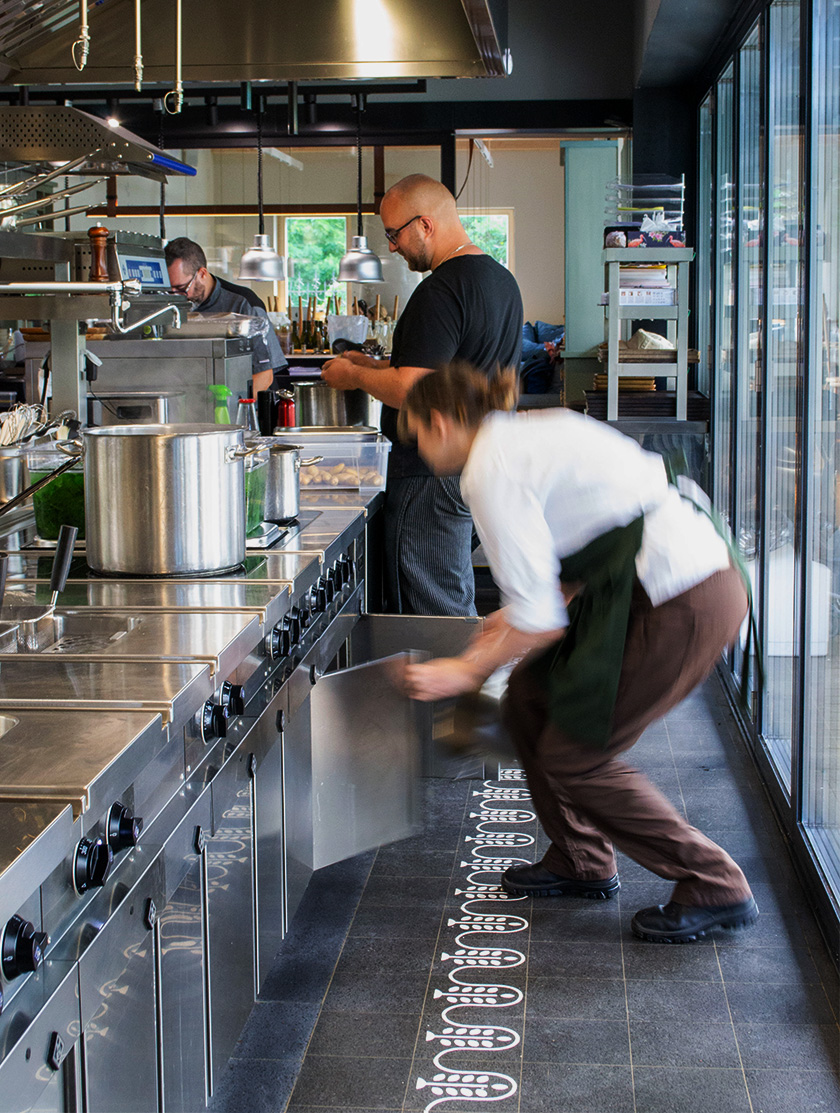
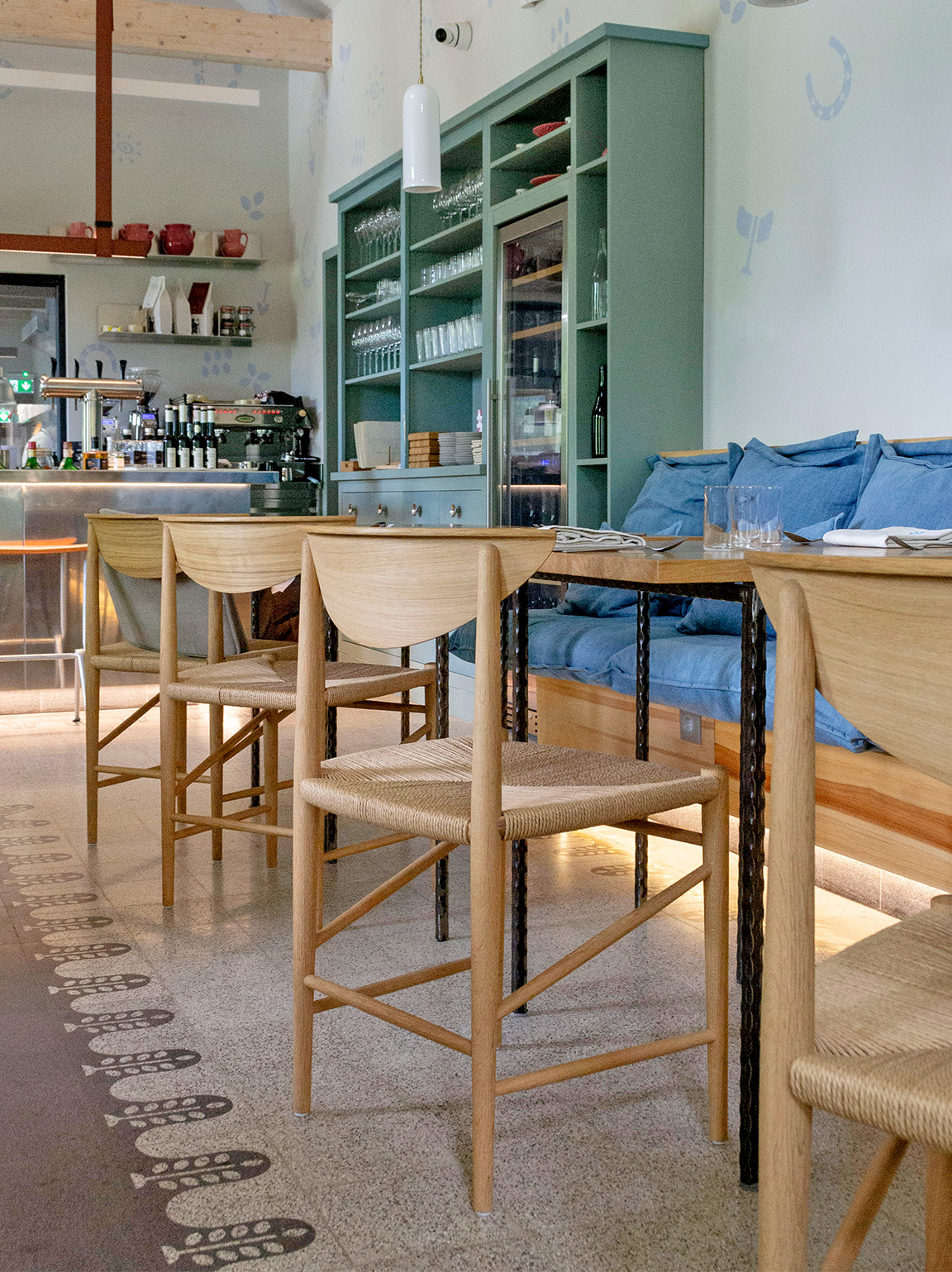
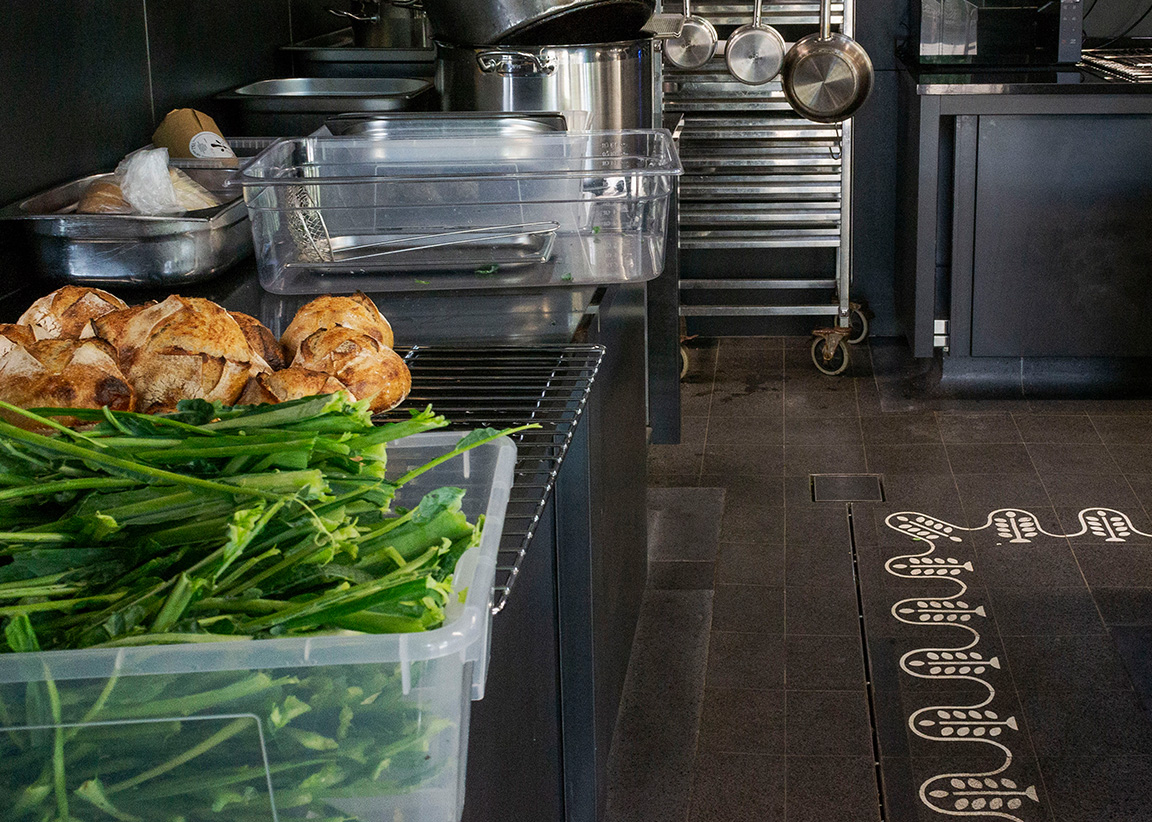
The unique terrazzo pattern was designed by Ákos Bosznay, a civil engineer. https://www.apconstruction.hu/
BESPOKE TERRAZZO TILE
PAPI RESTAURANT AND FARM
“This story begins where life ends, and according to the eternal cycle of things, something new sprouts at the end of life… I have become the one who creates something new from my father’s legacy, and I will pass it on to my own children, since I, too, have become a father in the meantime…”
The owner of the place is Hubert Hlatky-Schlichter, and these are his words. Hubert took his father’s former riding stable and transformed it into a “farm-to-fork” establishment that offers a love of the land and high-quality cuisine, combining the natural advantages of the several-hectare area along the Danube with his own talents and those of his team.
The interior design concept sought to reflect the original heritage (the riding arena), the landscape, and nature within the interior spaces, paying tribute to everything that made the project possible and emphasizing the values upon which the farm and its future are being built. In the inspirational collage by civil engineer Ákos Bosznay, who designed the unique terrazzo pattern, we can see numerous materials based on traditional, artisanal techniques—such as wicker and clay.
The schematic wheat ear motif, which has become the visual symbol of the Papi restaurant, was inspired by a traditional blue-dyed pattern, Dezső Korniss’s work titled *Miska*, and a collection of motifs from a contemporary Art Nouveau cement tile (The “miskakancsó” was originally a lead-glazed, conical pepper pot primarily produced in pottery workshops in the Middle Tisza region and the Great Plain.)
Handcrafted terrazzo tiles bring an ancient motif into the contemporary space
The civil engineer’s drawings clearly show how the complex pattern system—featuring custom designs, carpet-like elements, and corner pieces—manufactured by Iamart came to be, a system that appears in both the kitchen and the dining area.
The organic motif, rich in meaning, creates a perfect balance between simple, nature-inspired elegance and modern spatial design. The custom-designed, handcrafted, and through-colored terrazzo tiles, thanks to our traditional pressing technology, align beautifully with the Papi restaurant’s timeless and quality-driven philosophy.
The classic black and raw off-white color palette of the terrazzo tiles is understated in the dining area, while in the kitchen—where curved terrazzo elements connect to the countertop—it lends the spaces a distinctly contemporary feel.
The unique terrazzo pattern was designed by Ákos Bosznay, a civil engineer. https://www.apconstruction.hu/
